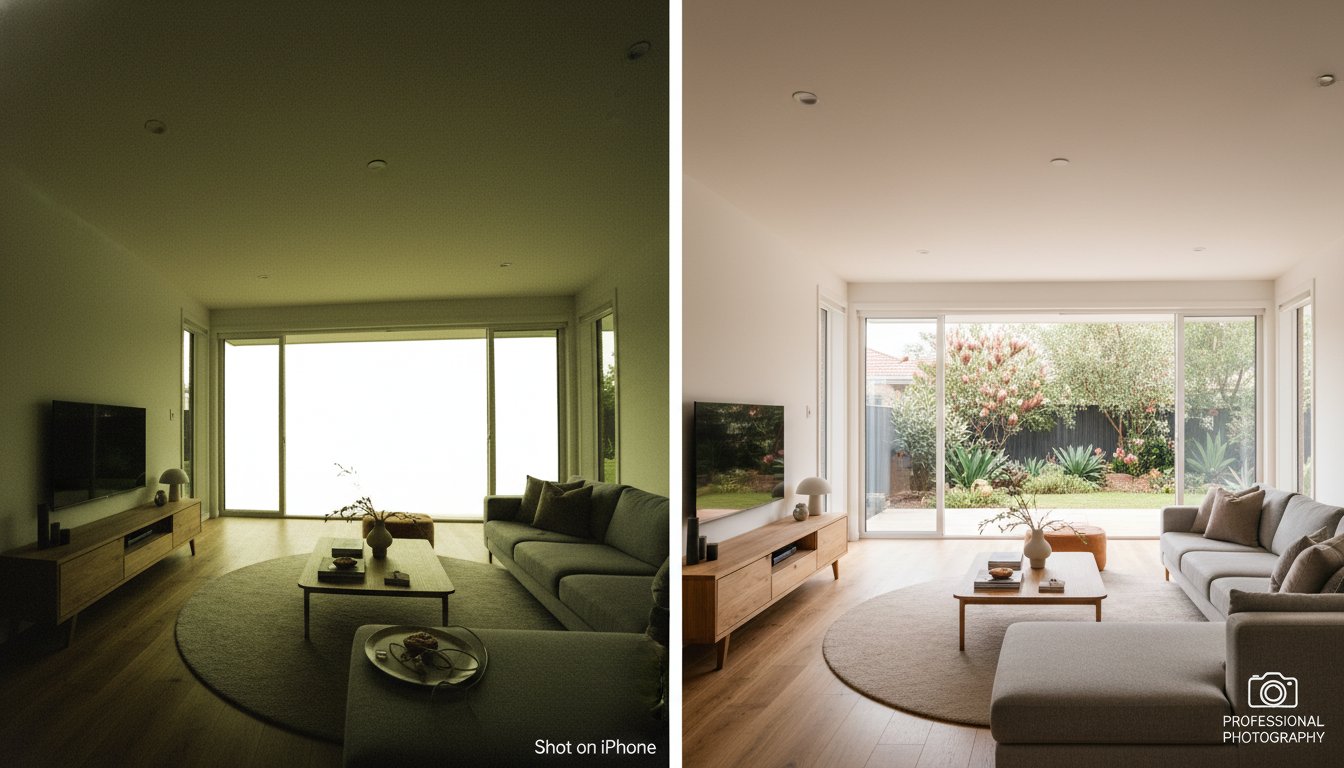
Saving a few hundred dollars on a DIY shoot might seem like a smart budget move, but data shows it could cost you up to $11,200 in the final sales price. With the introduction of strict disclosure laws for digital alterations in 2026, the debate over DIY real estate photos vs professional media has shifted from a creative choice to a critical compliance issue. Listings with professional imagery sell 32% faster and attract 61% more views online, yet many agents still risk their reputation on smartphone snaps.
You likely understand the frustration of wasting hours on-site only to receive negative vendor feedback when the listing stagnates. Discover the critical differences between smartphone captures and high-end property media. This article explores how your choice impacts enquiry rates and your standing as a premium agent. Learn how to leverage advanced tools like Matterport 3D tours and aerial imaging to win more listings and protect your brand equity in a regulated market.
• Identify how smartphone "visual noise" can alienate premium buyers and signal a lack of professional commitment to your vendors.
• Understand the technical superiority of 16mm wide-angle lenses and high dynamic range processing in capturing accurate property volume and detail.
• Analyse the direct link between high-quality property media and increased click-through rates that drive more physical inspections.
• Apply a strategic decision matrix to evaluate when the risks of DIY real estate photos vs professional services outweigh the initial cost savings.
• Streamline your agency operations by adopting standardised marketing solutions with 24-hour turnarounds to protect your brand equity.
The convenience of a modern smartphone often masks a significant risk to your marketing results. While mobile sensors have improved, the debate over DIY real estate photos vs professional media isn't just about megapixels; it's about the psychological impact on potential buyers. When a user scrolls through an Australian property portal, they encounter visual noise in amateur shots that creates immediate friction. This noise often includes:
• Cluttered backgrounds that hide key architectural features.
• Inconsistent lighting that makes spaces feel "closed in" or dingy.
• Distorted framing that confuses the viewer's sense of scale.
This cognitive load forces the brain to work harder to understand the space. Most buyers won't bother. They simply move to the next listing that looks effortless and inviting. Professional imagery removes these barriers, allowing the property’s true character to shine through without distraction.
Beyond the buyer's perspective, there's the vendor to consider. A property owner paying thousands in commission expects a premium service. Using a smartphone can signal a lack of investment in their asset. It suggests you're cutting corners. Data from 2026 confirms that listings with professional photos sell 32% faster and receive 61% more views online. There's also a hidden operational cost. Every hour you spend on-site struggling with lighting or tripod setups is an hour lost to prospecting or negotiating. Professional media isn't just a creative choice; it's a tool for scaling your agency and protecting your brand's reputation as a market leader.
Digital property portals have turned real estate into a high-speed visual competition. Research suggests buyers form an initial impression of a listing in just 0.02 seconds. This split-second judgement determines whether they click for more details or keep scrolling. If your hero image lacks technical precision, the perceived value of the home drops instantly. High-quality imagery creates an emotional connection, making the property feel like a premium lifestyle choice rather than just another house on the market. In a crowded market, stopping the scroll is the only way to ensure your listing gets the attention it deserves.
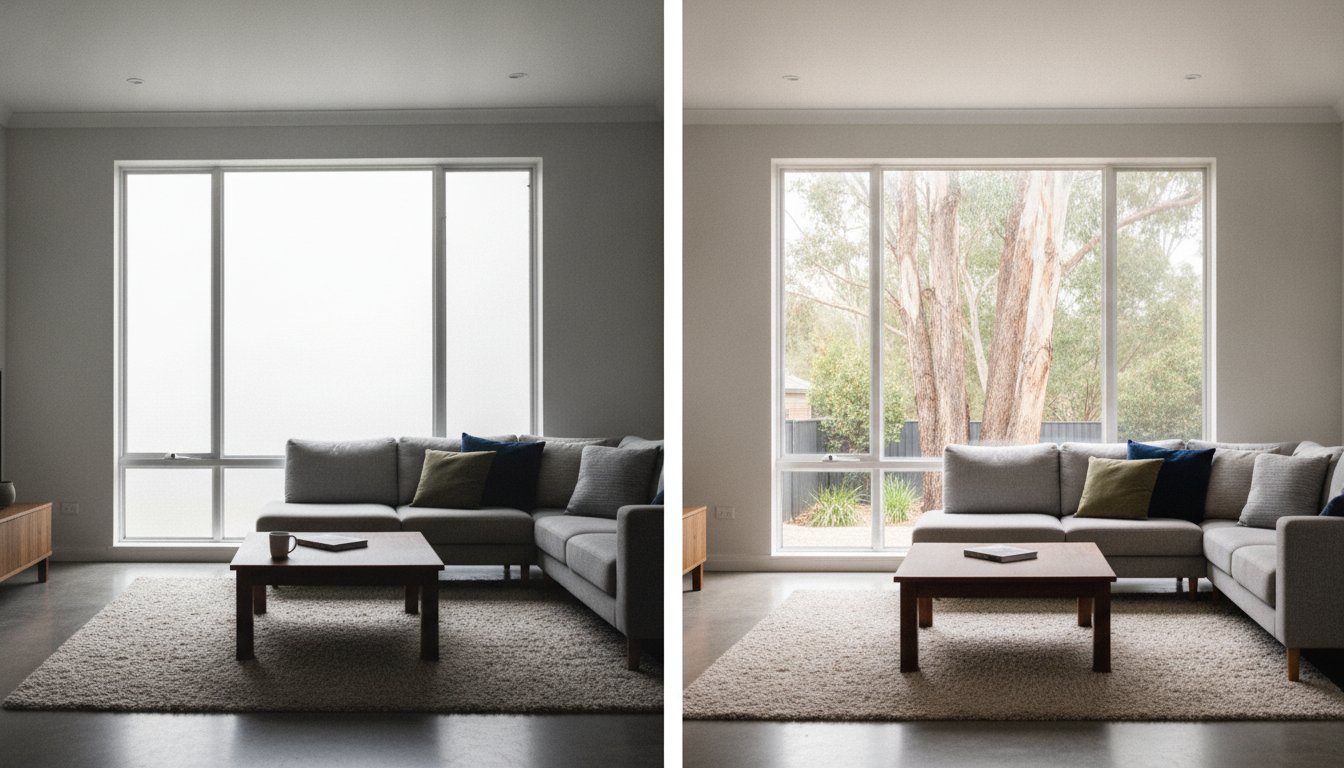
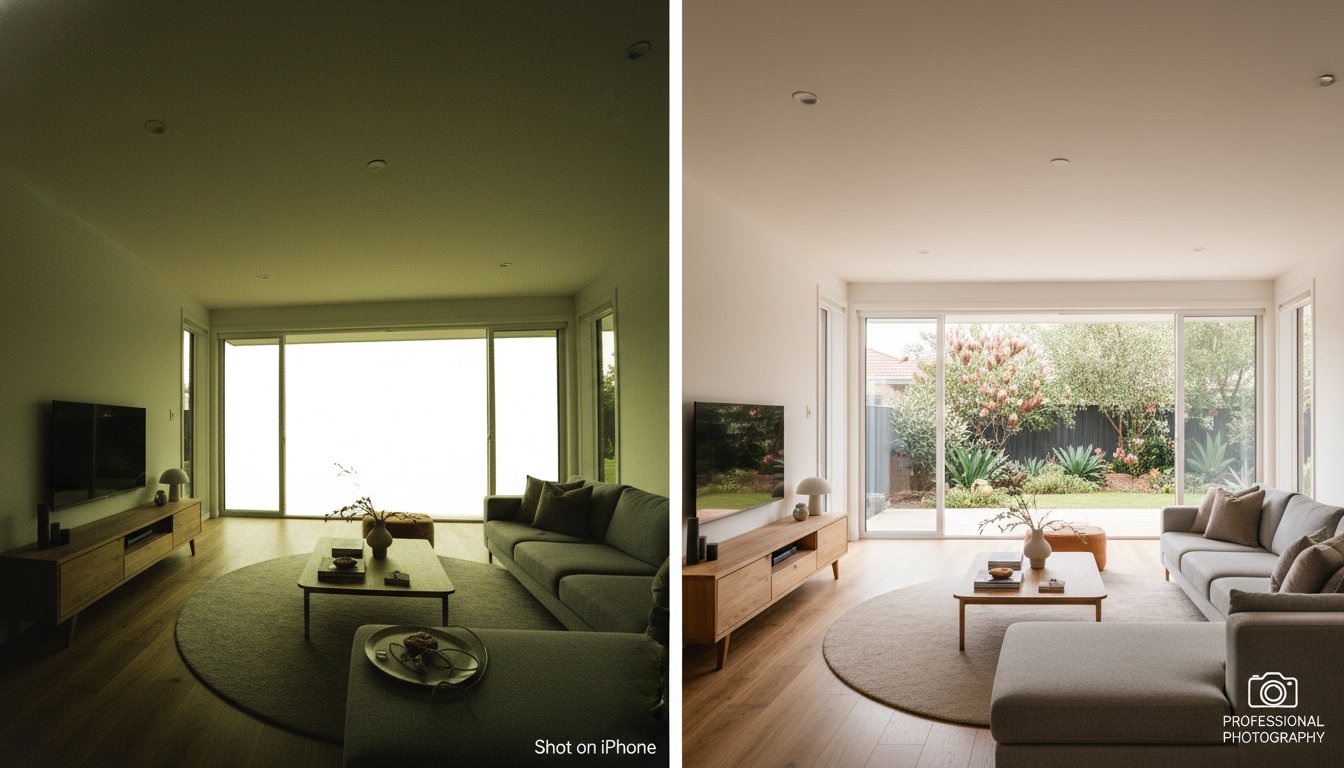
Amateur photography often ignores foundational architectural photography principles, leading to jarring technical errors. One common issue is converging vertical lines, where walls appear to be falling inward because the camera wasn't perfectly level. Another frequent fail is "blown-out" windows. Smartphones struggle with high-contrast scenes, leaving windows looking like glowing white rectangles instead of showing off a garden or city view. These distractions break the architectural flow and make rooms feel smaller and darker than they are in reality. Using a professional service ensures every line is straight and every view is visible, maximising the property's potential and your professional standing.
The technical gap between DIY real estate photos vs professional output is rooted in physics and high-end hardware. Most modern smartphones utilise digital "0.5x" ultra-wide modes that introduce significant barrel distortion. This effect makes straight lines appear curved and corners look unnaturally stretched. Professional photographers utilise full-frame sensors paired with 16mm ultra-wide prime lenses. These optics provide a massive field of view while maintaining rectilinear accuracy. This ensures that a kitchen island looks like a kitchen island, not a warped surfboard. By avoiding digital stretching, professional media presents a room's volume honestly and attractively.
The harsh Australian sun creates extreme lighting contrasts that overwhelm standard mobile sensors. Dynamic range is defined as the ratio between the brightest and darkest parts of an image. During a typical afternoon shoot in Sydney or Perth, a smartphone will either capture a bright window and a pitch-black room, or a visible interior and a completely "blown-out" white window. Professionals employ bracketed exposure techniques. By merging multiple frames, we ensure the buyer sees the texture of the timber floorboards and the clarity of the garden view simultaneously. This technical depth is a major reason why professionally marketed properties sell 32% faster on average.
Human psychology responds to order and symmetry. In real estate marketing, straight vertical lines are the primary indicator of technical quality. When a camera is tilted even slightly, walls appear to lean, creating a sense of instability. Professionals utilise heavy-duty tripods and geared heads to lock in a perfect eye-level perspective. This precision builds unconscious trust with the viewer. It presents the property as a solid, well-constructed asset rather than a skewed snapshot. Consistent height across all shots also helps lead a buyer’s eye naturally through the floor plan as if they were walking the halls themselves.
Post-processing represents the final stage of this technical workflow. Unlike a simple social media filter, professional colour correction involves balancing white points and removing unnatural colour casts from indoor lighting. This ensures that the "cool grey" feature wall doesn't appear muddy or yellow in the final listing. For agents who require this level of technical precision across every listing, booking professional property media ensures a standardised, high-quality output that protects your brand reputation. This scientific approach to imagery converts casual browsers into serious enquiries by presenting a clear, honest, and high-value representation of the home.
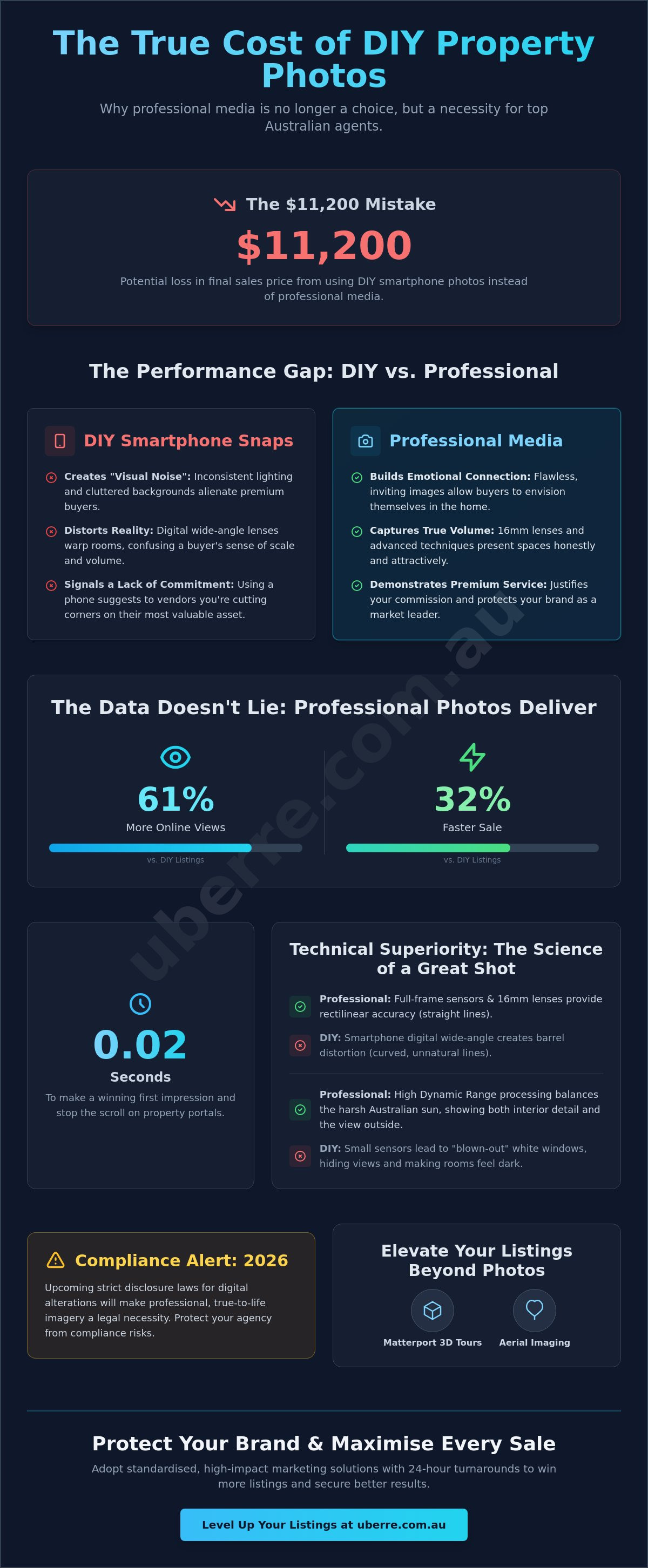
Professional property media is more than an aesthetic choice; it is a data-driven marketing asset. The primary metric for online success is the Click-Through Rate (CTR). Statistics show that listings with high-end visuals receive 61% more views online compared to amateur shots. This surge in digital traffic translates directly into physical foot traffic. When a property looks premium in the portal, it generates a higher volume of inspection bookings. This is the leading indicator of a successful sale. High enquiry rates create competition, which is the most effective way to drive a final sales price upward.
The choice between DIY real estate photos vs professional media fundamentally alters the sales trajectory. While DIY might save on upfront marketing costs, the financial risk of a lower sales price is substantial. Verified data indicates that homes with professional photos sell for between $3,400 and $11,200 more on average. This return on investment far outweighs the initial photography fee. High-quality assets also serve a dual purpose. They provide the high-resolution foundation needed for social media reels, high-impact brochures, and digital advertising, ensuring your campaign remains cohesive across all channels.
Serious buyers prioritise listings that exhibit a high standard of maintenance and presentation. Technically superior professional real estate photography establishes an immediate sense of value. It justifies a higher asking price before the buyer even steps through the front door. By setting a premium tone for the campaign, you filter for high-intent enquiries and reduce time wasted on low-value leads. This professional standard protects your brand reputation, signalling to future vendors that you are an agent who invests in achieving the best possible results.
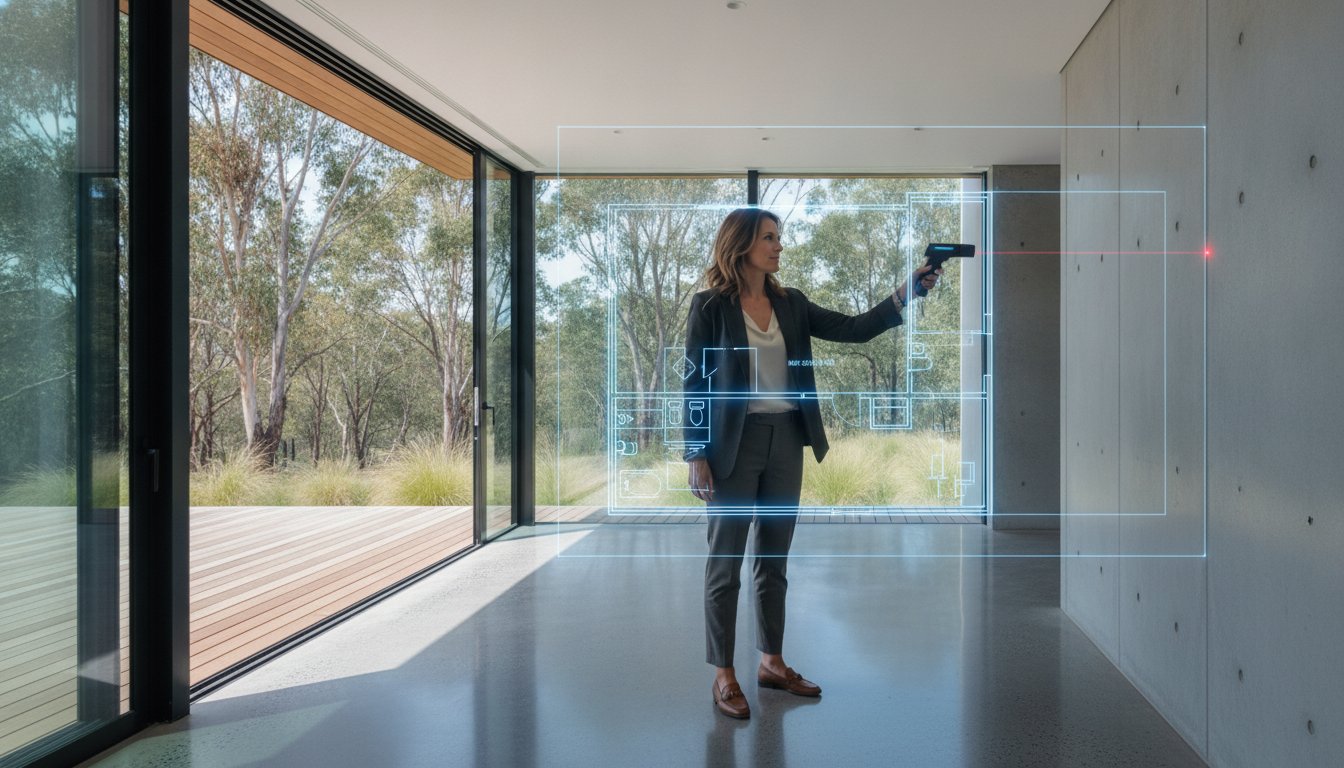
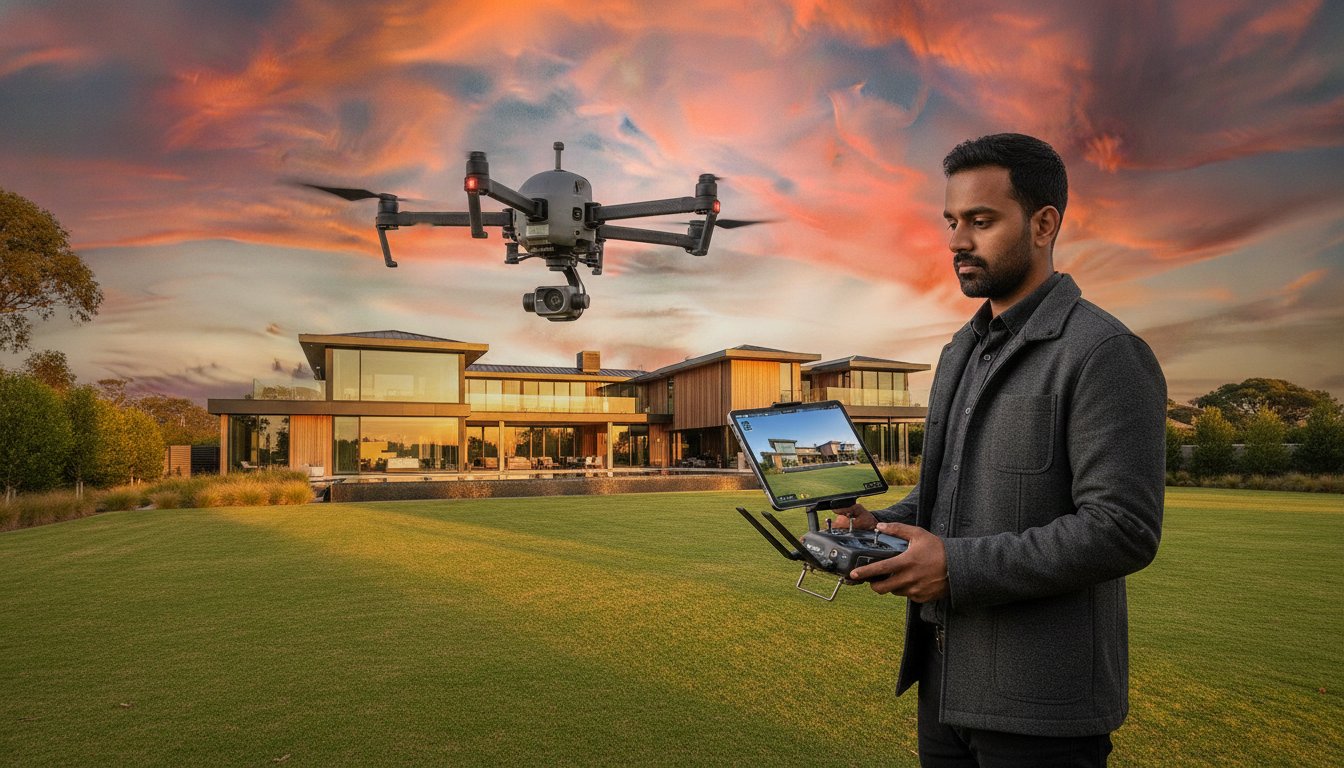
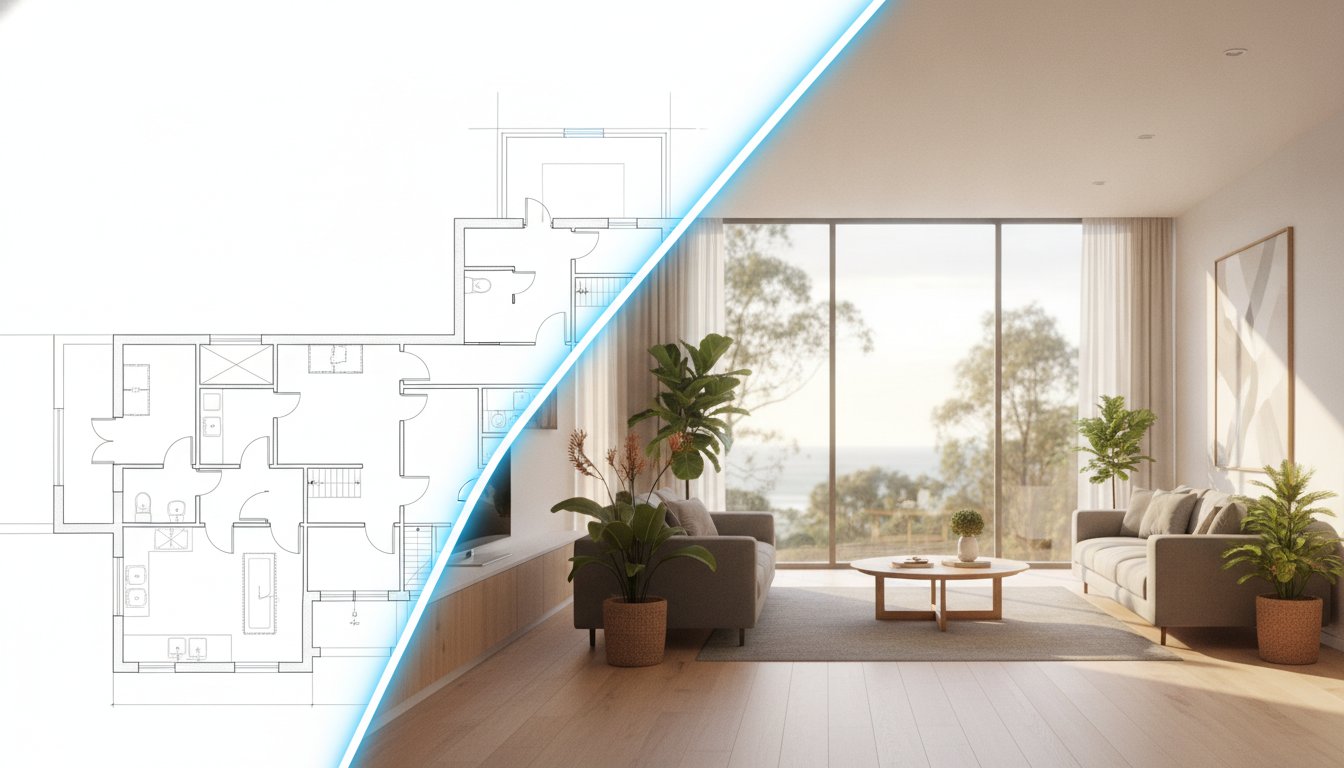
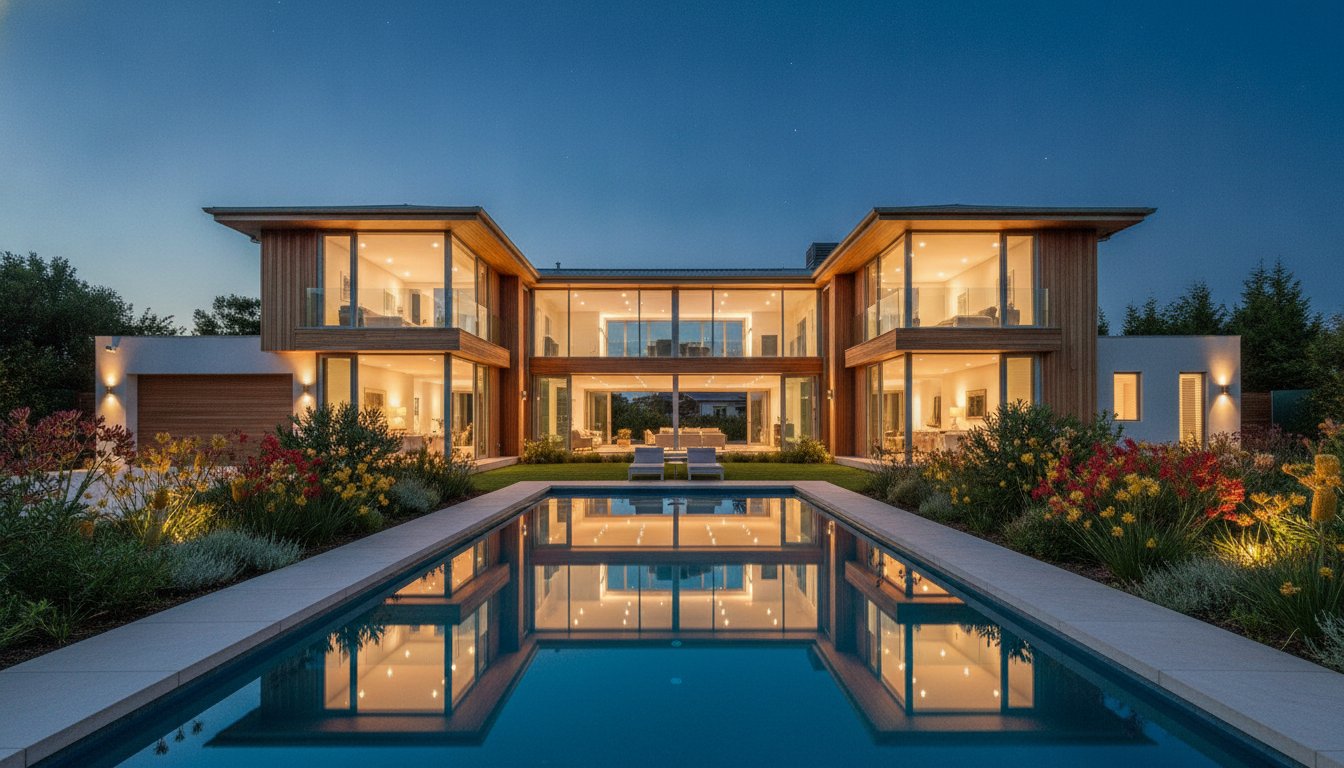
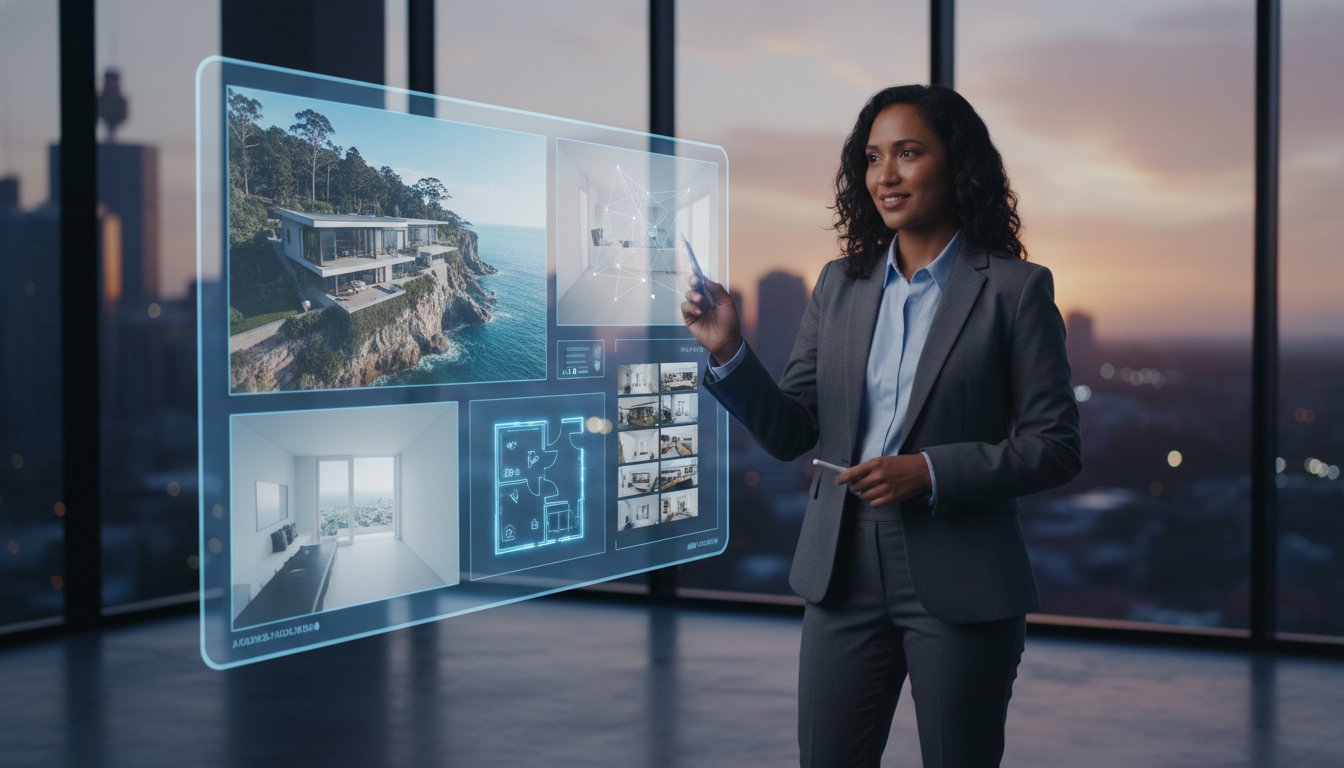
High-impact imagery works best when integrated into a complete marketing suite. Photos capture the emotion of a home, while real estate floor plans provide the logic and spatial context. Together, they qualify buyers before they arrive at the property. For example, pairing Day Photography with Twilight Photography creates a comprehensive visual story that highlights both lifestyle and architecture. This multi-layered approach ensures the listing remains fresh on the portal. It prevents the property from becoming "stale" in the eyes of savvy investors and local buyers.
Reducing Days on Market (DOM) is critical for maintaining vendor confidence. Listings with professional photos sell 32% faster than those with amateur imagery. This efficiency allows you to move through inventory quickly, freeing up time to win more listings. In a fast-paced Australian market, the speed of the sale is often just as important as the price itself. Professional media provides the competitive edge required to close deals faster and keep your sales pipeline moving.
Choosing between DIY real estate photos vs professional media requires a clinical assessment of the property and your long-term business goals. It isn't just about the current campaign; it's about your next listing presentation. The decision hinges on the "Agent Brand" factor. Every listing you publish acts as a public portfolio. If a potential vendor sees a poorly lit, distorted DIY shoot under your name, they will likely question your ability to market their own asset. Professional imagery signals that you are a high-performance partner who values the vendor's equity. It builds immediate trust with industry professionals and homeowners alike.
Speed is often used as an excuse for DIY, yet professional workflows in 2026 have evolved to meet the demands of the fast-paced Australian market. Modern agencies require a 24-hour turnaround to keep momentum during a campaign's launch phase. Standardised booking platforms allow you to book a shoot and receive edited, portal-ready assets the next day. This efficiency removes the administrative burden of editing your own snaps. It allows you to focus on high-value tasks like prospecting and closing deals. Balancing rapid deployment with premium quality is no longer a trade-off; it is a baseline requirement for modern property marketing.
There are limited scenarios where DIY captures remain functional. Low-value short-term rentals or basic storage units where the return on investment is minimal may not require a full media suite. Similarly, internal progress shots for developers or site inspections intended for private records don't need professional polish. However, even in "basic" markets, competition is fierce. If every other agent in your area is using professional media, your DIY listing will stand out for the wrong reasons. This can lead to longer days on market and negative feedback from vendors who feel their property hasn't been given a fair go.
For any residential sale at or above the local median price point, professional media is non-negotiable. Properties with unique architectural features, expansive floor plans, or significant views require technical expertise to translate their value to the screen. You must also consider your own professional trajectory. To stand out as a real estate agent and win future business, your marketing must be flawless. High-quality visuals attract not just buyers, but future sellers who are looking for a sophisticated, results-driven marketing approach.
Modern Australian homeowners are increasingly tech-savvy and aware of digital marketing standards. They expect their property to look its best on major portals from day one. Meeting these expectations is critical for maintaining your reputation and securing positive referrals. If you are ready to elevate your brand presence and secure higher-quality enquiries, you can book professional property media to ensure every listing meets the gold standard of modern efficiency.
The decision between DIY real estate photos vs professional services often boils down to scalability. For an agency to grow, it requires a standardised marketing infrastructure that operates independently of an agent’s personal schedule. Relying on smartphone snaps or fragmented freelance networks creates organisational bottlenecks. UberRE provides a corporate partnership model that prioritises reliability and high-quality, standardised output. By utilising a centralised booking platform, you ensure every listing across your office maintains a consistent visual tier. This consistency protects your brand equity. It ensures your agency’s digital presence remains sophisticated, regardless of the property's price point.
Efficiency is the cornerstone of modern property sales. Our 24-hour turnaround for edited media allows you to move from the initial appraisal to a live listing with unprecedented speed. This rapid workflow is essential in competitive Australian markets where being first to portal can define a campaign’s success. Instead of managing multiple vendors, you can integrate photography, floor plans, and video marketing into a single, cohesive workflow. This modular approach to content creation saves hours of administrative labour. It allows your team to focus on their core competency: selling.
Professional media providers offer a level of accountability that casual freelancers cannot match. By moving away from the unreliable freelancer model, you gain access to a tech-integrated solution that functions as a modern utility. Managing multiple campaigns becomes seamless through a single digital dashboard. You can track bookings, download assets, and organise floor plans without leaving your desk. This expert specialist approach ensures your marketing collateral is always construction-grade and technically precise. It allows you to focus on high-value prospecting while the media infrastructure runs in the background.
Your portfolio of past listings is your strongest asset during a vendor appraisal. Prospective sellers look at your current stock to judge how you will handle their home. Presenting a total marketing package as a standard part of your service is a powerful tool for winning more listings. It demonstrates that you have a sophisticated, data-driven strategy to maximise their sales price. When your brand is consistently associated with high-end, reliable visual content, you become the go-to authority in your local area. High-quality imagery sells the agent just as much as it sells the house.
Elevate your next property campaign by moving beyond the limitations of amateur imagery. Secure your position as a market leader with visual assets that drive engagement and build vendor trust. Request a booking today to experience a streamlined marketing partnership built for modern agency growth.
The evidence regarding DIY real estate photos vs professional media is definitive. High-quality imagery is a critical infrastructure tool for protecting your brand equity and maximising vendor returns. Technical precision in lighting and composition removes the visual noise that causes buyers to scroll past. By choosing standardised professional output, you eliminate the operational bottlenecks of amateur photography while ensuring every listing presents a premium image to the market. This approach doesn't just sell the home; it sells your agency as a market leader.
UberRE provides total service assurance with national coverage across Australia. We offer a comprehensive suite of modular products, including Day Photography, Floor Plans, and Video Tours. Every standard photography package comes with a reliable 24-hour turnaround to keep your campaigns moving at pace. Book your professional property media package with UberRE today to elevate your next listing and win more business. Build a more efficient agency with visual assets that drive results and instill vendor confidence.
Yes, it is a strategic investment in the property's final sales price. High-quality imagery justifies the asking price and attracts high-intent buyers who are prepared to act quickly. By presenting the home as a premium asset, you reduce the risk of low-ball offers and lengthy negotiations. It also protects your agency brand, ensuring every listing in your portfolio maintains a consistent, high-end standard.
Smartphone sensors lack the dynamic range and lens optics required for professional property marketing. Even with natural light, mobile cameras struggle to balance bright windows with darker interiors, often resulting in "blown-out" views or muddy shadows. The debate over DIY real estate photos vs professional media isn't just about lighting; it's about avoiding the barrel distortion and digital grain that signals a lack of effort to prospective vendors.
Costs vary across the Australian market based on the property size and the specific media package required. Most agencies offer tiered solutions that include standard day photography, twilight sessions, or comprehensive bundles with floor plans and video tours. Investing in a professional package ensures you receive technically precise, high-resolution assets that meet the marketing standards expected by modern Australian homeowners.
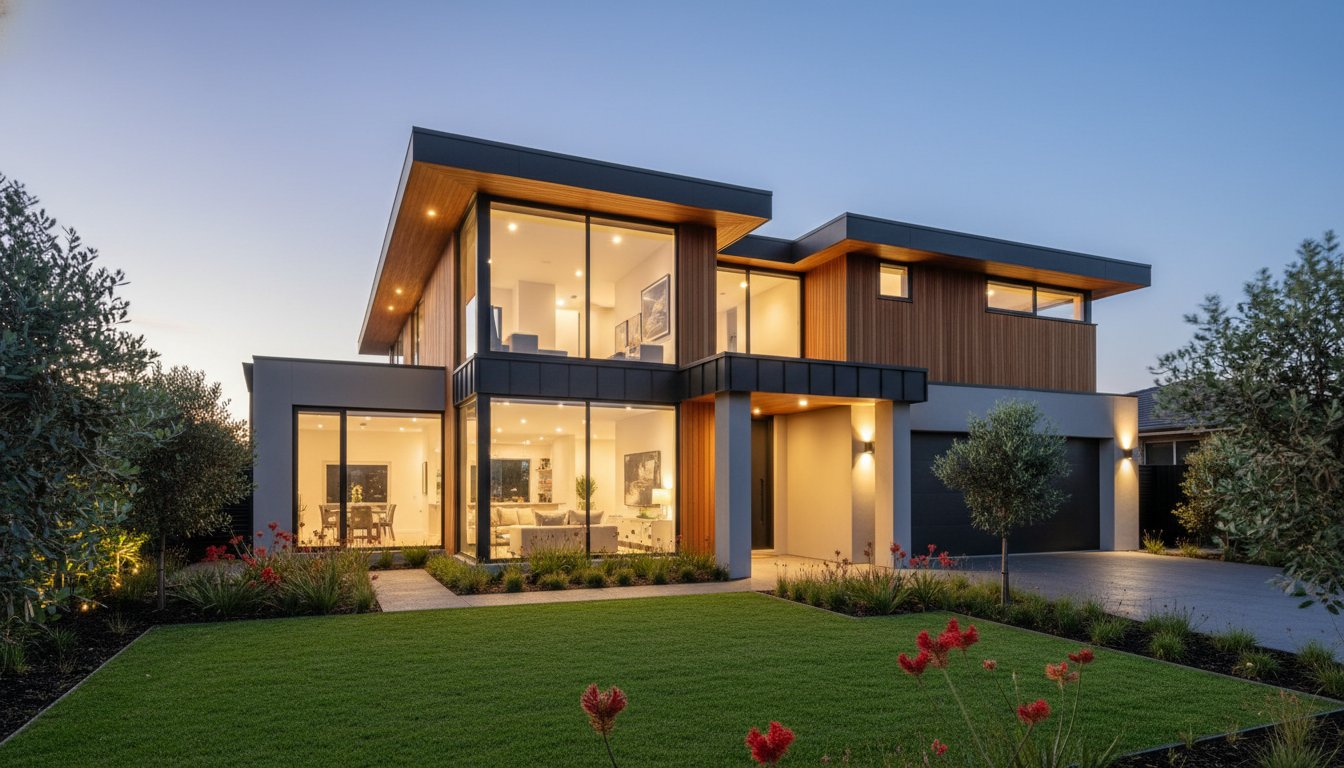
Mid-morning or early afternoon usually provides the most consistent natural light for interiors. However, Twilight Photography is the gold standard for high-end listings. Shoots conducted during the "blue hour" highlight exterior lighting and create an emotional, aspirational atmosphere that stands out on property portals. The specific timing depends on the home's orientation and which features you want to emphasise.
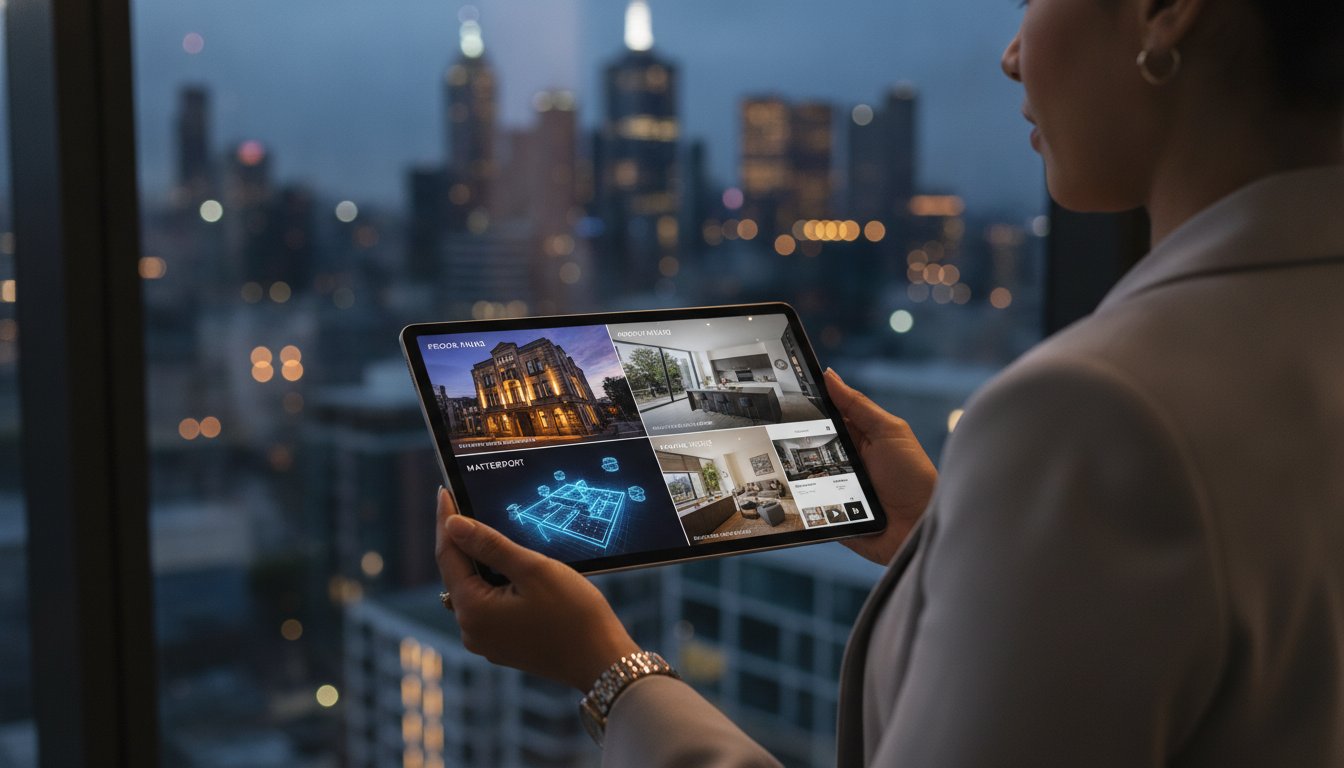
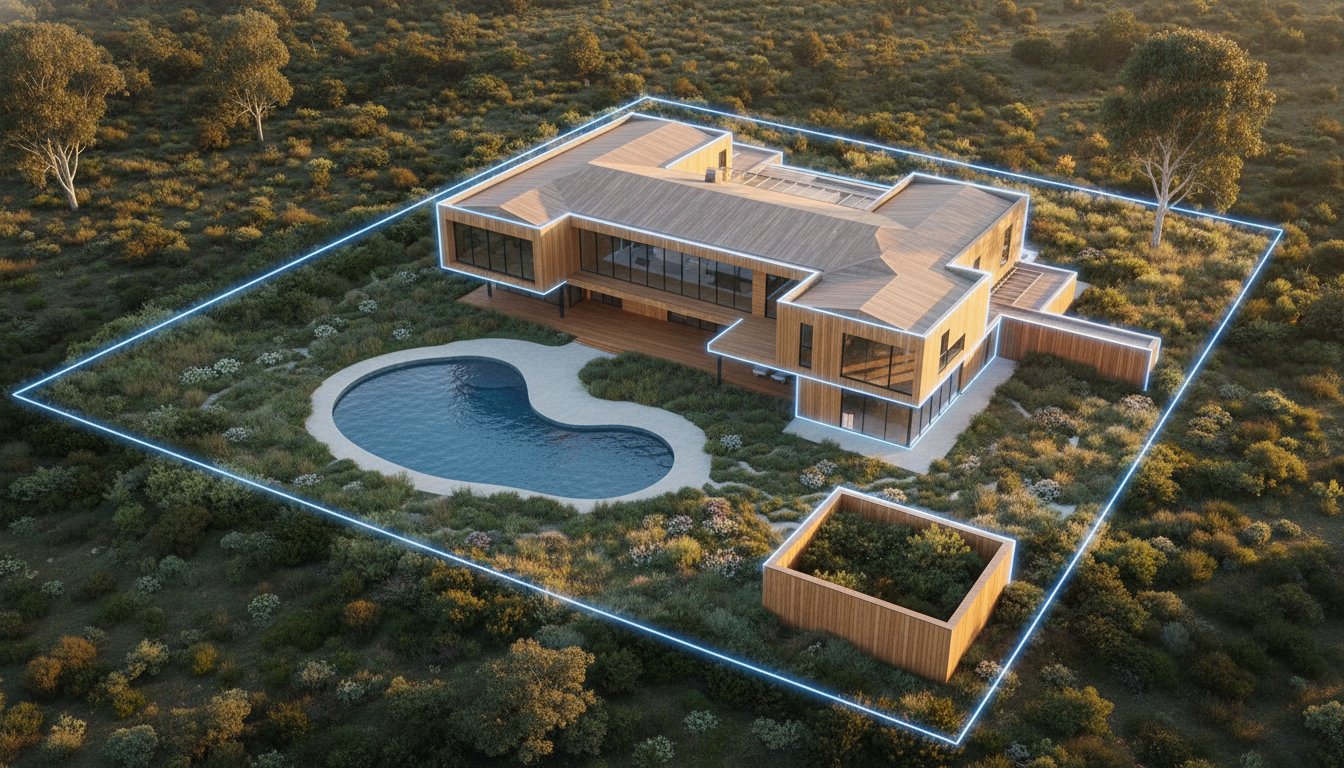
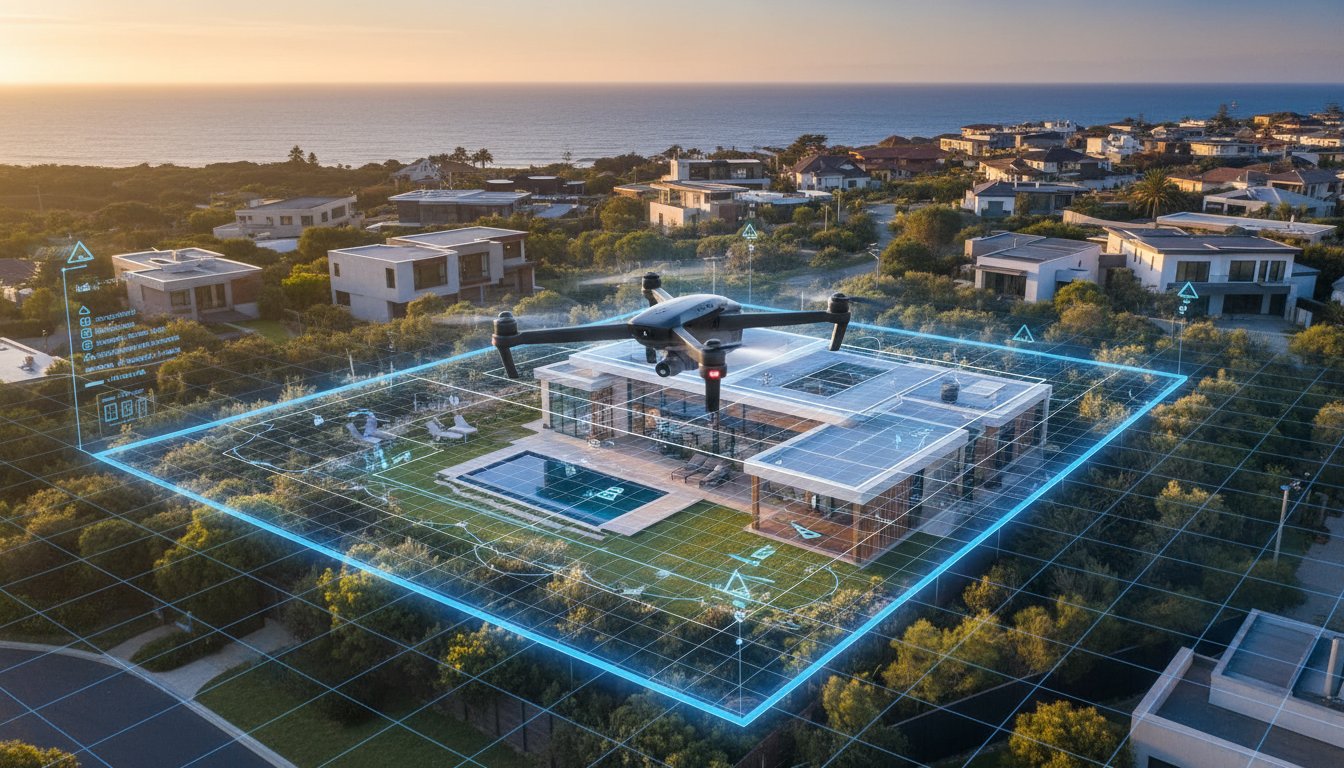
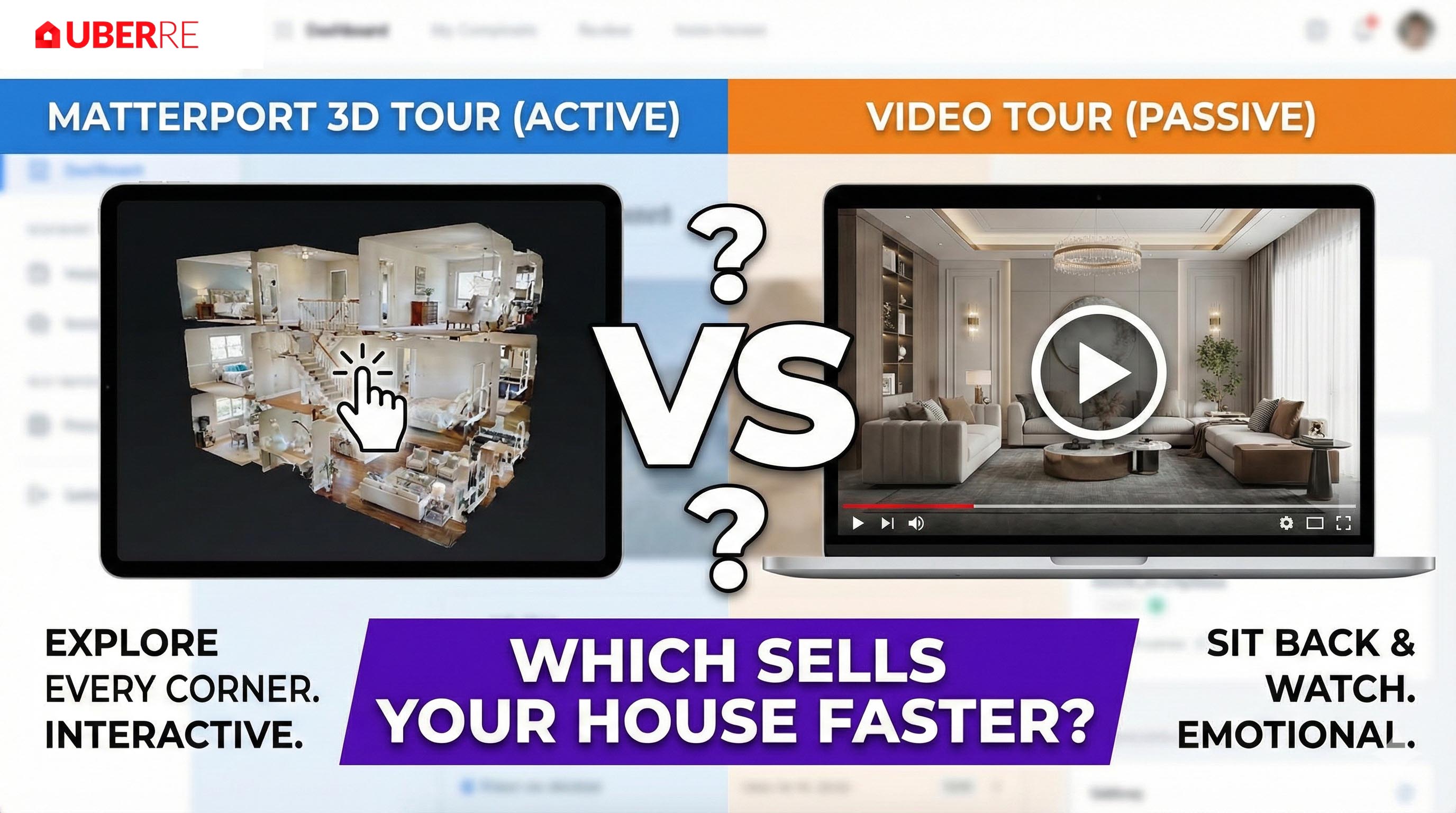
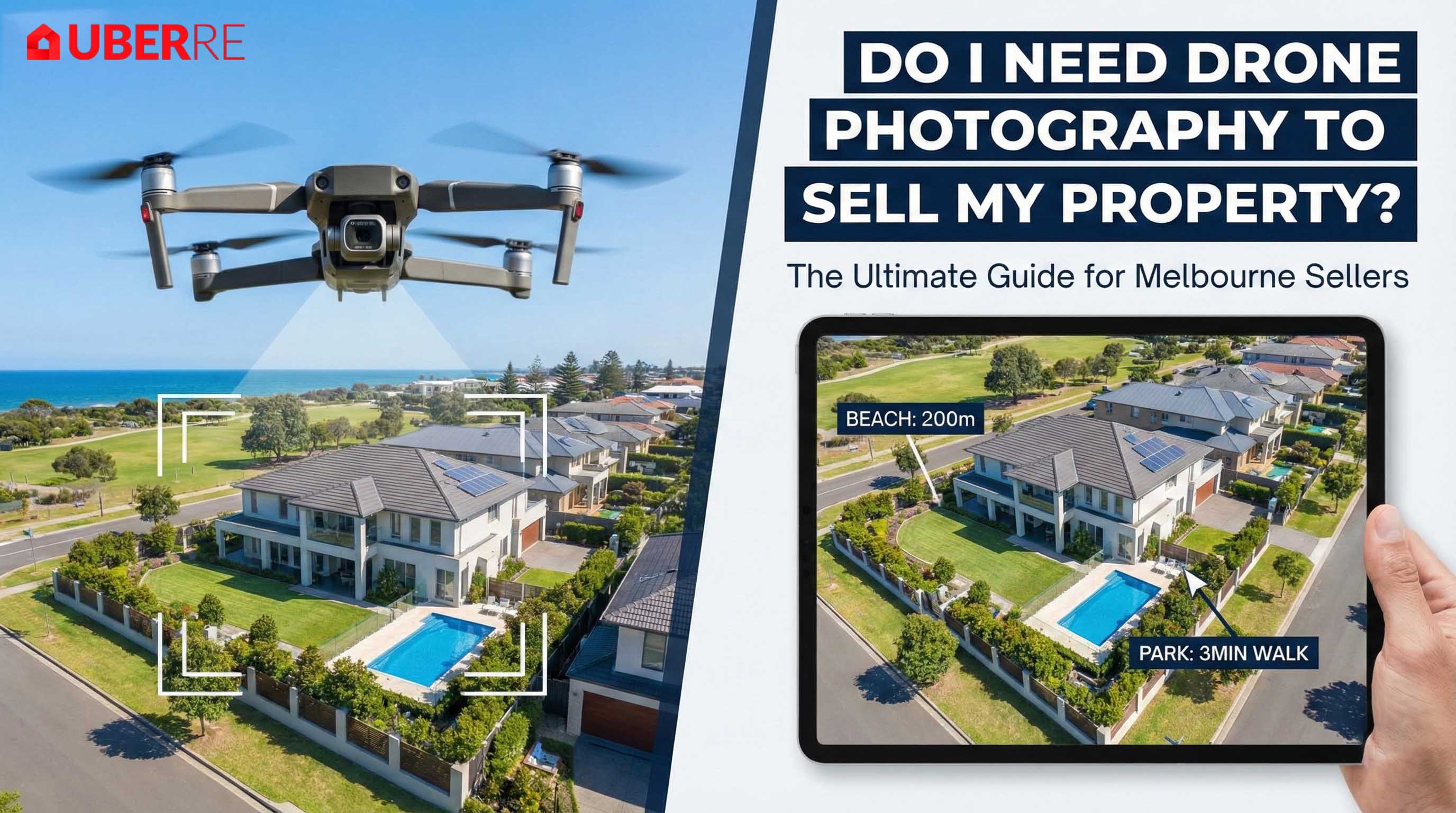
A standard shoot typically takes between 45 and 90 minutes depending on the property's scale and the services booked. If you include extras like Matterport 3D Tours or Aerial Photography, the duration will increase. Professionals work with a service-first flow to ensure minimal disruption to the vendor while capturing all necessary angles with technical precision and construction-grade tools.
Data consistently shows that listings with high-quality imagery achieve higher engagement rates and shorter days on market. By stopping the scroll on digital portals, professional photos drive more physical inspections. This increased foot traffic creates the competitive environment needed to secure a fast sale. It is a proven method for maintaining campaign momentum and achieving a swift result for your client.
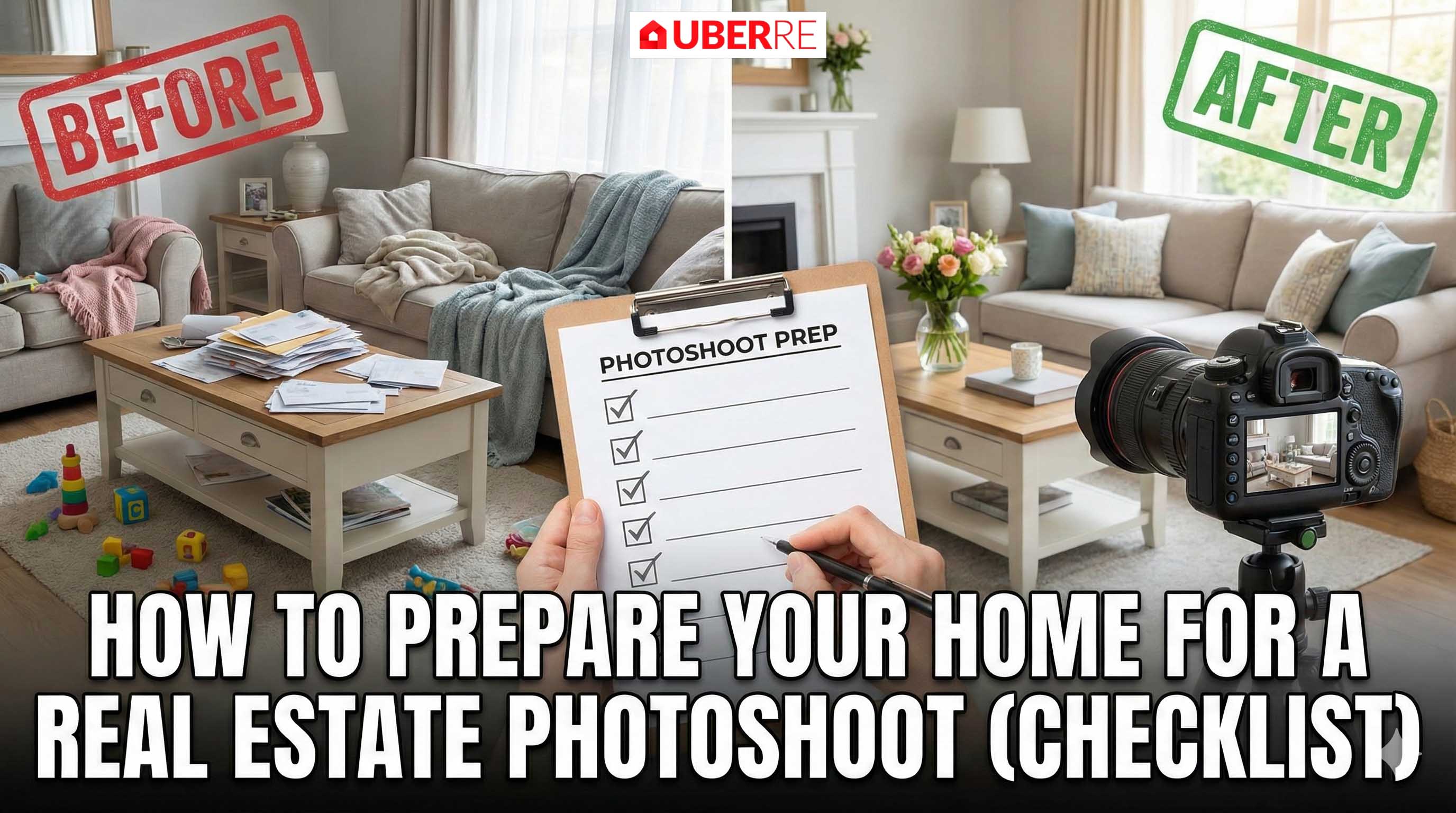
Focus on decluttering surfaces and maximising the sense of space in every room. Ensure all light bulbs are working, windows are clean, and personal items are stowed away. For external shots, move vehicles from the driveway and tidy the garden. A well-prepared home allows the photographer to focus on architectural flow and technical composition rather than managing household clutter during the shoot.
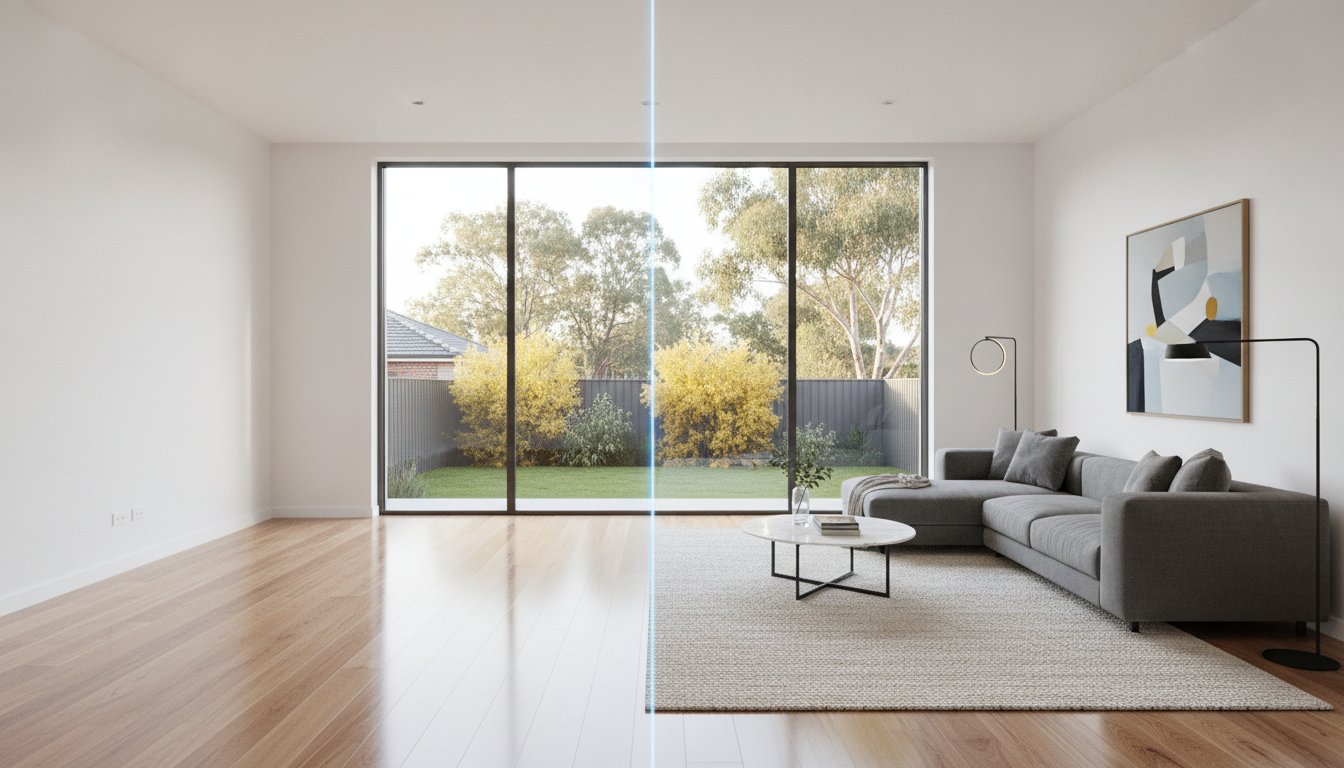
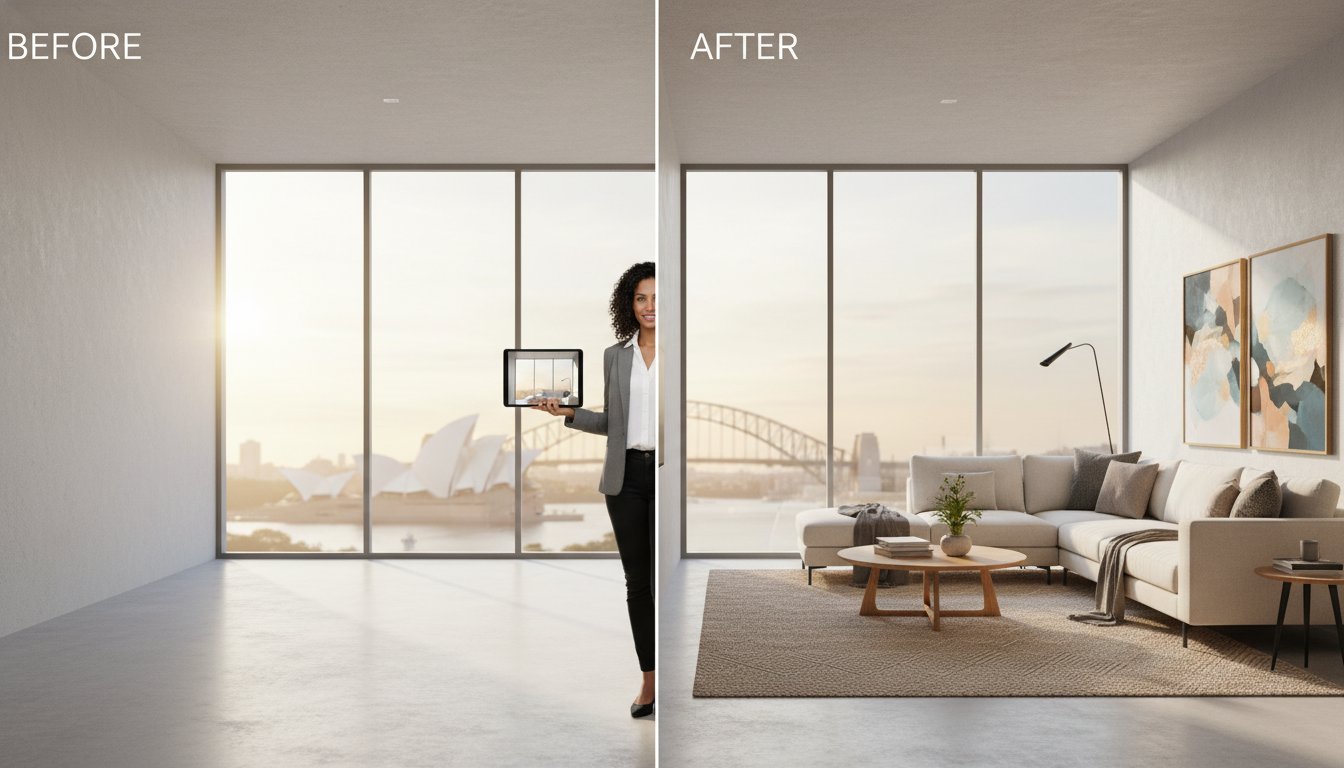
Basic digital tidy-ups are common, but strict Australian advertising standards and 2026 regulations require transparency. While minor items can be addressed in post-processing, permanent fixtures like power lines or damaged siding should generally remain to avoid deceptive advertising. For empty spaces, utilising Virtual Furniture is a more effective way to demonstrate potential without misrepresenting the property's physical condition or architectural integrity.
Book with UberRE
8 professional photos ready within 24 hours of the shoot, for print, online and social media. Same price everywhere we work in Australia.
See the service and prices
-2.png)