
Why are your premium Matterport tours failing to convert digital views into physical inspections when video content is proven to generate 403% more enquiries? In a fragmented 2026 market where Sydney dwelling values fell by 0.9% in May, your property narrative must act as the high-performance glue between visual assets and lead generation. Many agents struggle with the disconnect between high-end photos and mediocre text. Mastering specific real estate copywriting tips is no longer a creative luxury. It's a technical requirement for maintaining a competitive edge and avoiding the administrative burden of stagnant listings.
You likely feel the frustration of repetitive drafting and the high administrative burden of listing similar properties. This guide provides professional techniques to master property storytelling and turn casual browsers into committed buyers. We'll outline how to align your narrative with high-end visuals to drive faster listing turnarounds and higher quality enquiries. Our analysis covers structural listing frameworks, 2026 regulatory compliance including the latest $110,000 NSW underquoting penalties, and the specific language shifts needed to engage a cautious market.
• Position property copy as a strategic sales tool to improve search visibility and engagement on major Australian portals.
• Implement a technical framework that synchronises your "Hero Feature" with primary photography to create a cohesive narrative.
• Utilise professional real estate copywriting tips to articulate premium Australian lifestyle features like seamless alfresco transitions and precision-engineered kitchens.
• Optimise listing descriptions for visual-first platforms by converting text into high-impact social media reel scripts and digital micro-copy.
• Leverage professional copywriting services to ensure a consistent brand voice and maintain an efficient 24-hour listing turnaround.
In the current Australian property market, the standard definition of copywriting has evolved from simple description to a high-performance sales engineering tool. Traditional listings often rely on generic adjectives that fail to differentiate a property in a cooling market. Professional copy is now a strategic asset designed to capture attention within the first three seconds of a user’s scroll. This technical approach is essential for SEO on major portals like Realestate.com.au and Domain. These platforms prioritise engagement metrics, meaning your text must be engineered to increase dwell time and click-through rates. Effective real estate copywriting tips focus on data-driven persuasion rather than mere creative writing.
There is a clear psychological shift occurring among Australian buyers. They aren't just looking for a physical structure; they're searching for a curated lifestyle. A listing that focuses solely on the number of bedrooms and bathrooms misses the opportunity to connect with the buyer’s aspirations. You need to articulate the specific lifestyle outcomes a property provides, such as the efficiency of a home office or the social value of a designer kitchen. Maintaining a consistent brand voice across your website, brochures, and social media channels is non-negotiable. It builds immediate trust and positions you as a premium service provider in a competitive environment.
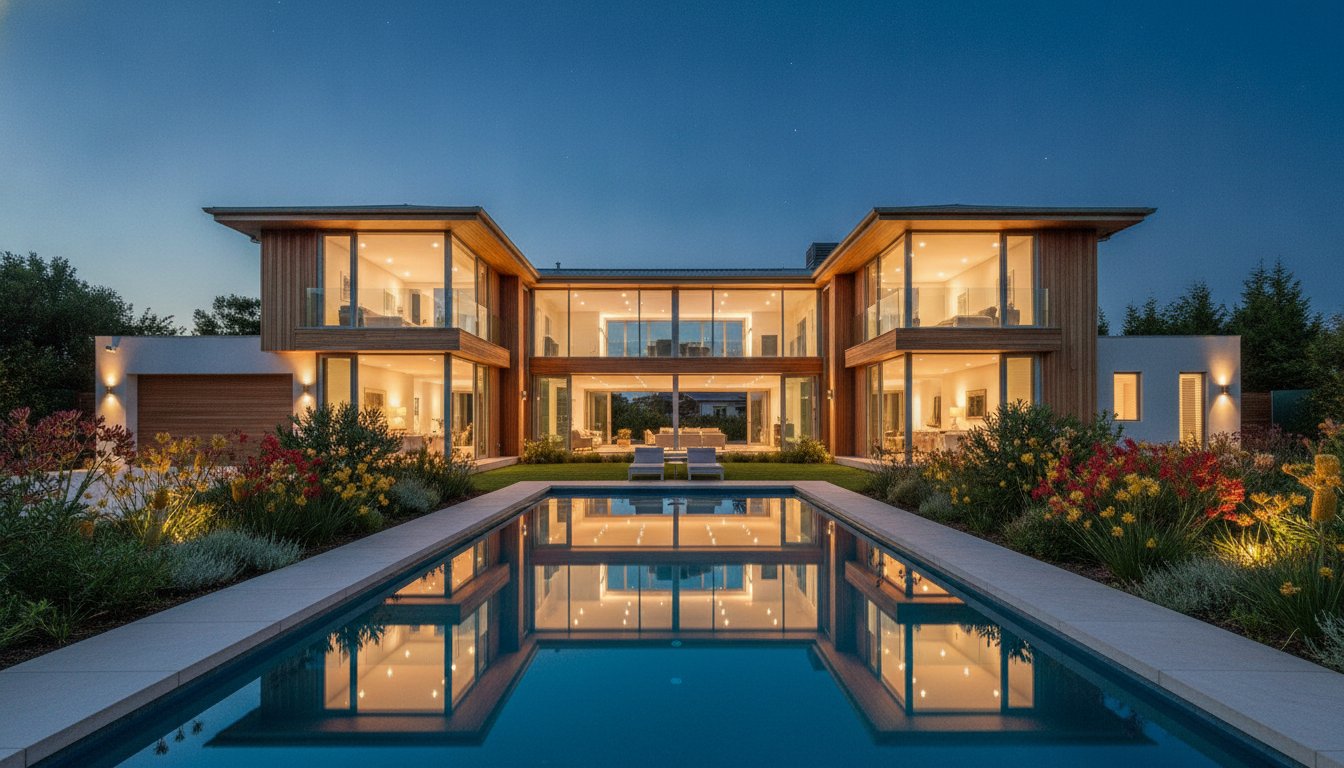
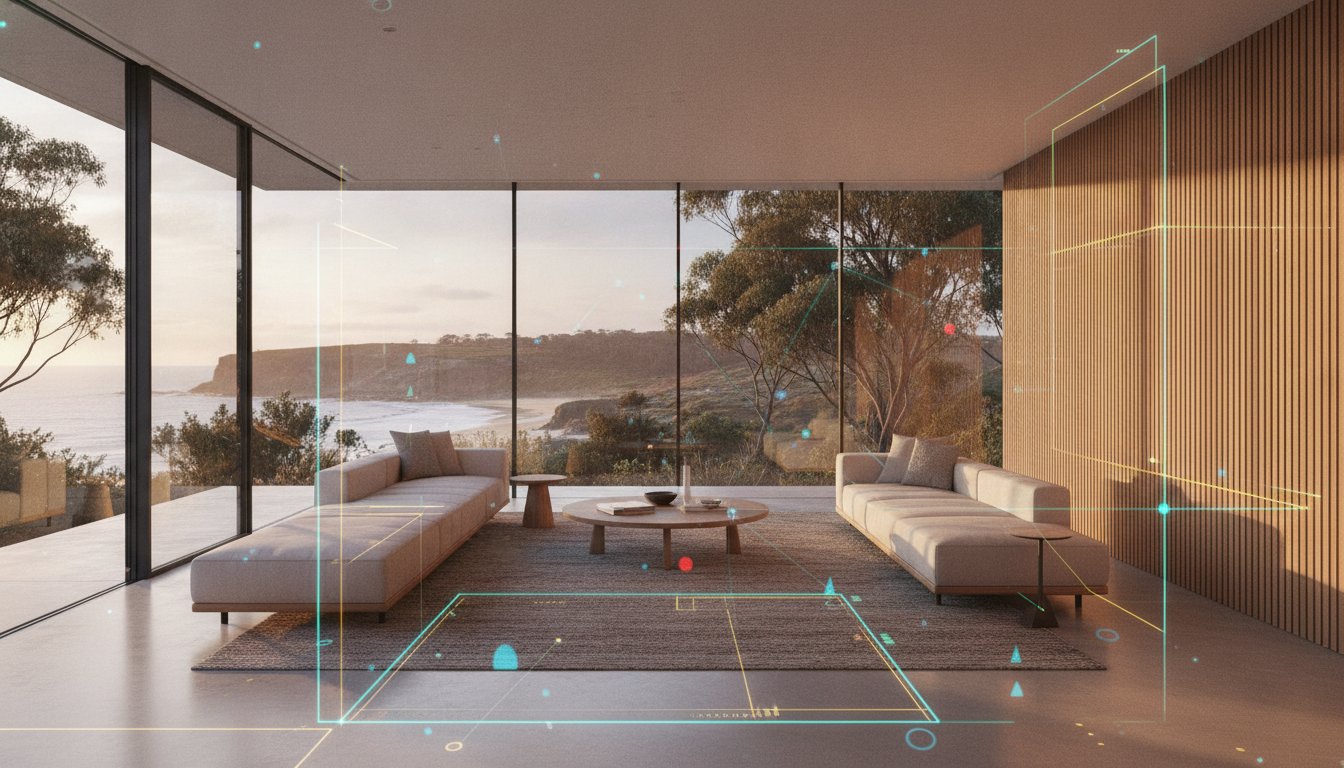
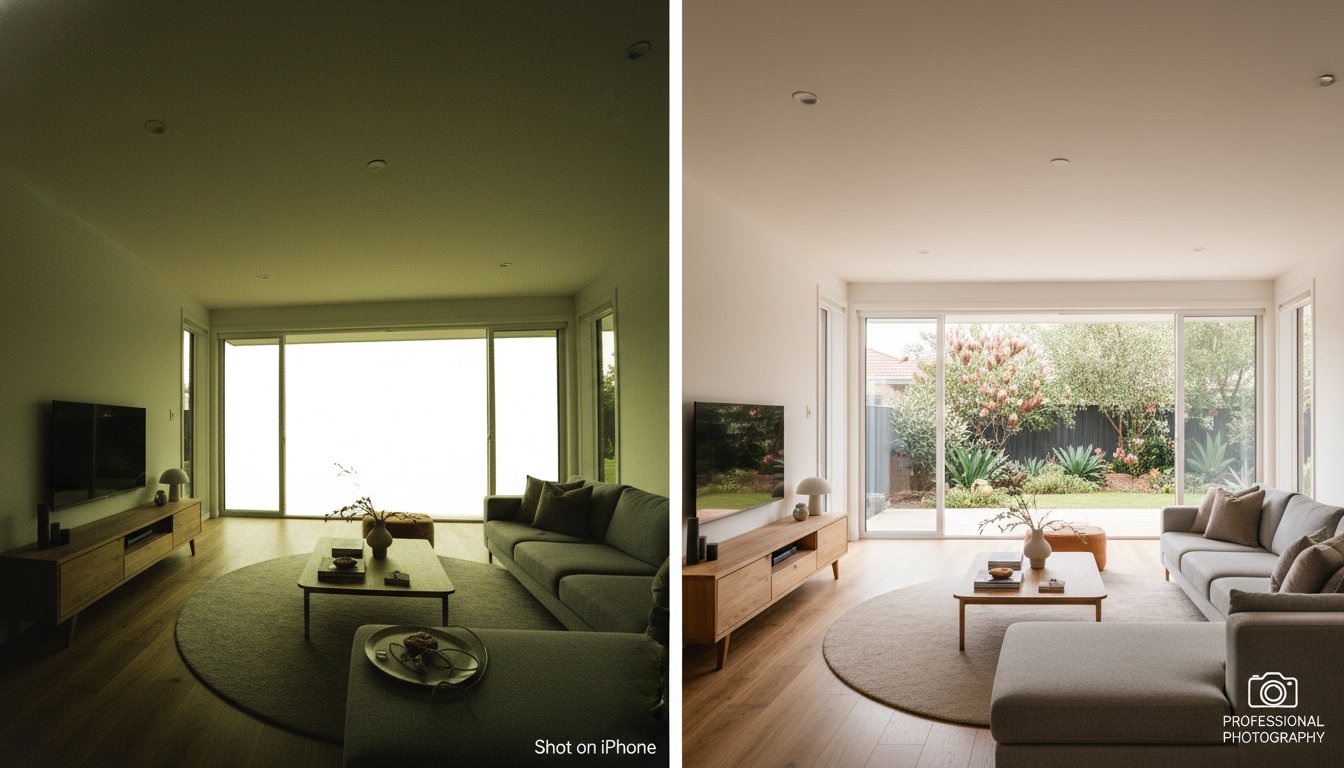
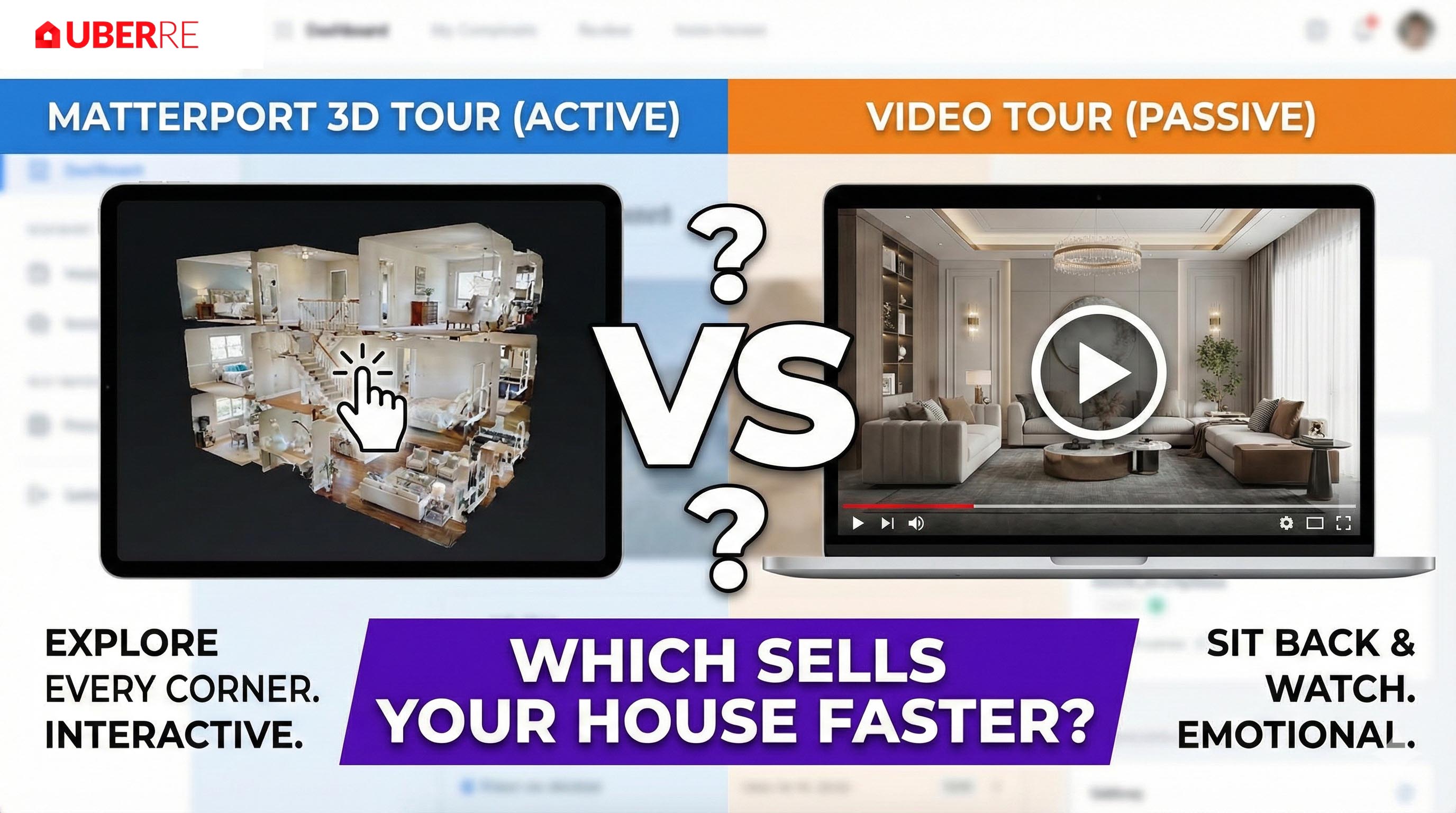
Visual assets and descriptive text must function as a single, integrated unit. If your professional real estate photography highlights a bespoke stone island bench, your copy should immediately validate that visual cue by explaining its functional elegance. This logic extends to interactive media. In a Matterport 3D tour, your text acts as the digital guide, pointing out technical specifications that a camera might miss, such as double-glazed windows or smart-home integrations. Narrative Alignment is the synchronisation of visual cues and descriptive text.
Market speed in 2026 is uncompromising. Listings that launch with "description to come" placeholders suffer a significant loss in Day 1 momentum, which is the most critical window for lead generation. Top-tier agents now utilise professional-grade copy delivered within a 24-hour cycle to ensure every listing is market-ready from the moment it goes live. This approach reduces administrative friction, allowing you to focus on high-value tasks like buyer negotiations. By integrating real estate copywriting tips into a standardised marketing workflow, you ensure every property receives a high-quality, results-driven narrative without delaying the campaign launch.
High-converting listings aren't the result of creative inspiration. They're the product of a repeatable, technical framework. By following a structured approach, you can eliminate writer’s block and ensure every description aligns with your visual assets. These real estate copywriting tips focus on driving immediate engagement through logic and lifestyle positioning. It's about engineering a narrative that converts.
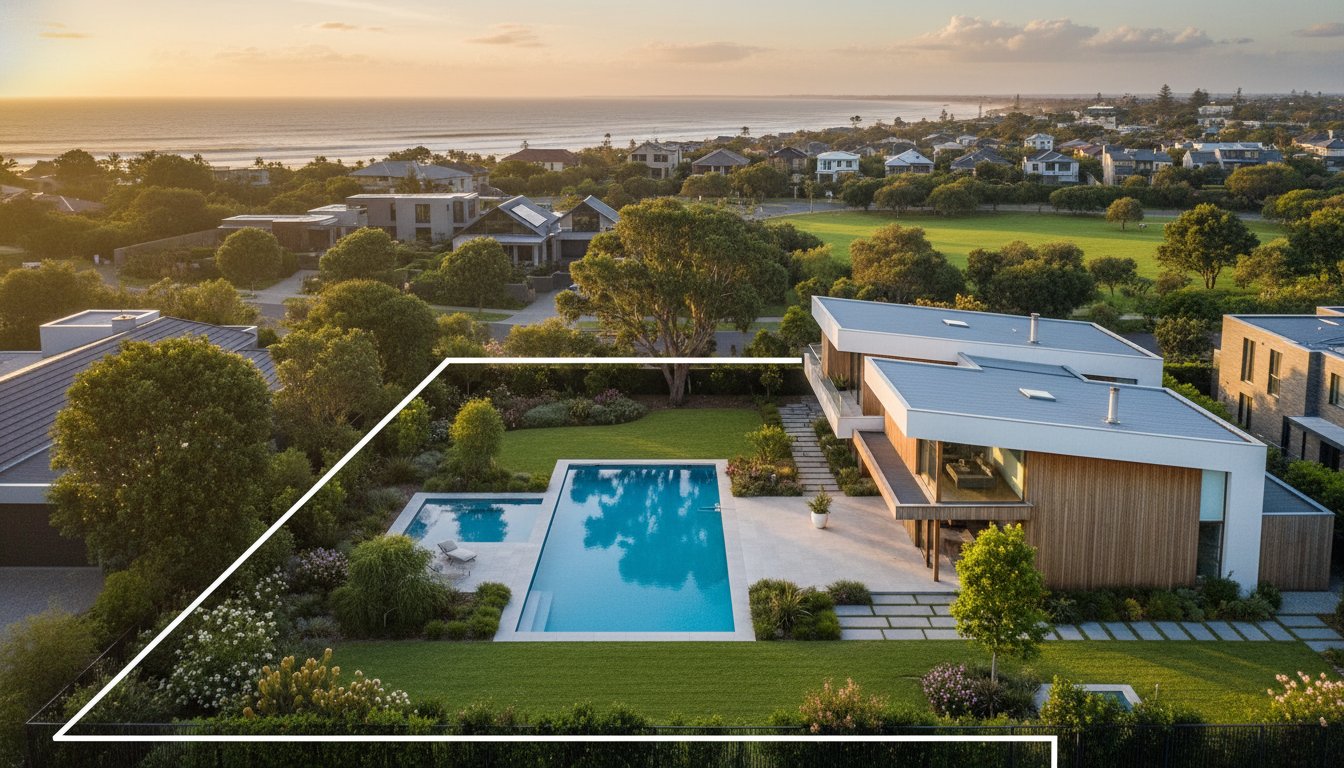
Step 1: Identify the Hero Feature. This must match your primary listing photo to ensure narrative consistency. If your lead image is an aerial shot of a coastal reserve, your text shouldn't start with the kitchen renovation. Align your opening statement with your professional real estate photography to anchor the buyer's interest immediately.
Step 2: Draft a lifestyle-oriented headline. Move beyond basic specifications. A headline like "Entertainer’s Sanctuary with North-Facing Alfresco in Paddington" provides more context than "3 Bed House for Sale". It promises a specific outcome rather than just listing a room count.
Step 3: Apply the Inverted Pyramid. Digital users decide whether to stay or bounce in seconds. Place the most vital information, such as zoning, land size, and key architectural highlights, in the first paragraph. Compliance is critical. Under the June 2026 updates to real estate advertising laws, NSW agents face penalties of up to $110,000 for underquoting. Accurate, transparent copy is now a legal necessity.
Step 4: Audit for cliche fatigue. Delete phrases like "rare opportunity", "blank canvas", or "hidden gem". These terms have lost their persuasive power. Replace them with technical precision. Instead of "stunning views", use "uninterrupted 180-degree vistas across the Swan River".
Step 5: Conclude with a low-friction CTA. Direct the reader toward the next step, such as downloading a floorplan or booking a private inspection. Keep it professional and direct.
The 2026 headline formula is Benefit + Unique Feature + Location Context. This structure immediately answers the buyer's unspoken question: "What’s in it for me?" Using action-oriented verbs like "Discover", "Secure", or "Elevate" increases click-through rates. "Centred on Luxury" creates a psychological anchor that "4 Bed, 2 Bath House" simply cannot match. It’s about creating immediate perceived value.
Mobile users don't read; they scan. Keep paragraphs limited to 2-3 sentences to maintain white space on small screens. Use the Three-Act Structure: The Hook (the lifestyle promise), The Tour (a logical flow through the floorplan), and The Close (the technical specs and CTA). Utilise bullet points for technical data like strata fees or school catchment zones to improve digestibility. If you're struggling to maintain this standard across all listings, you can register for professional copywriting support to streamline your marketing workflow.
Australian buyers in 2026 possess a sophisticated understanding of property value, often prioritising specific lifestyle configurations over total floor area. To convert these high-intent browsers, your descriptions must move beyond generic summaries. Advanced real estate copywriting tips for the current market focus on technical precision within the Australian context. You need to articulate how a home functions, not just how it looks. This requires a deep dive into the features that define the local way of life, from climate-responsive design to specialised internal zones.
The "Alfresco" transition is a primary selling point that requires more than a passing mention. Don't just state there's a deck; describe the seamless integration between indoor living and outdoor entertaining. Use technical details like "recessed stacking sliders" or "commercial-grade bi-fold doors" to explain how the transition occurs. Similarly, when detailing "Gourmet Kitchens", focus on the high-value infrastructure. Mentioning a "Butler’s pantry with dual sinks" or "integrated Miele appliances" provides the noun-driven clarity that premium buyers demand. These details validate the price point and reduce the administrative burden of answering basic feature enquiries.
Natural light is a non-negotiable requirement for the majority of Australian purchasers. Highlighting a "North-facing aspect" is a powerful psychological trigger, suggesting thermal efficiency and consistent winter sun. Technical real estate copywriting tips suggest linking this aspect to specific rooms, such as "North-facing master suites" or "sun-drenched open-plan galleries". For growing families, specialised zones like "Rumpus Rooms" or "Teenage Retreats" should be positioned as essential privacy solutions. Clearly define these spaces as distinct, modular products within the home to help buyers visualise long-term utility.
Precision in terminology builds immediate professional trust. Using "En suite" instead of "second bathroom" specifically denotes master-level luxury and privacy. The term "Walk-in-robe" acts as a high-intent keyword that signals premium storage capacity. You must also be technically accurate regarding materials. Correctly identifying "Polished spotted gum floorboards" versus "high-performance Hybrid flooring" prevents mid-campaign friction and ensures your copy aligns perfectly with the tactile experience of a physical inspection.
Buyers are often searching for a specific community character rather than just a suburb name. Focus on "Village vibes", "elite school catchments", and "efficient transport links" to establish the property's logistical value. Highlight the weekend lifestyle by referencing proximity to "established parklands" and "local artisan cafes". To describe a neighbourhood’s character without using geographic clichés, focus on the architectural heritage and the specific demographic utility of the streetscape. This approach sells the daily experience of the location, moving the reader from a casual observer to a committed lead.

Visual-first marketing is the dominant force in 2026. Your property narrative must adapt to platforms where attention is the scarcest commodity. Transitioning from long-form portal descriptions to high-impact social media reels requires a structural shift in your writing. On Instagram and TikTok, your copy serves as the technical blueprint for video scripts and voiceovers. Effective real estate copywriting tips for social media focus on high-speed engagement rather than exhaustive detail. You need to distill a 400-word listing into ten seconds of punchy, action-oriented dialogue that encourages shares and saves.
Consistency is your primary trust builder. A disconnect between a high-end print brochure and a casual TikTok voiceover creates brand friction. Your tone should remain authoritative and professional across all channels, even when the format changes. Use "Instagrammable" captions that focus on a single, aspirational outcome. Instead of listing every room, highlight the specific "lifestyle moment" that matches the visual content. This ensures your social media presence reinforces your position as a premium specialist. If you want to maintain this level of precision across every channel, you can book a professional copywriting session to align your text with your visual assets.
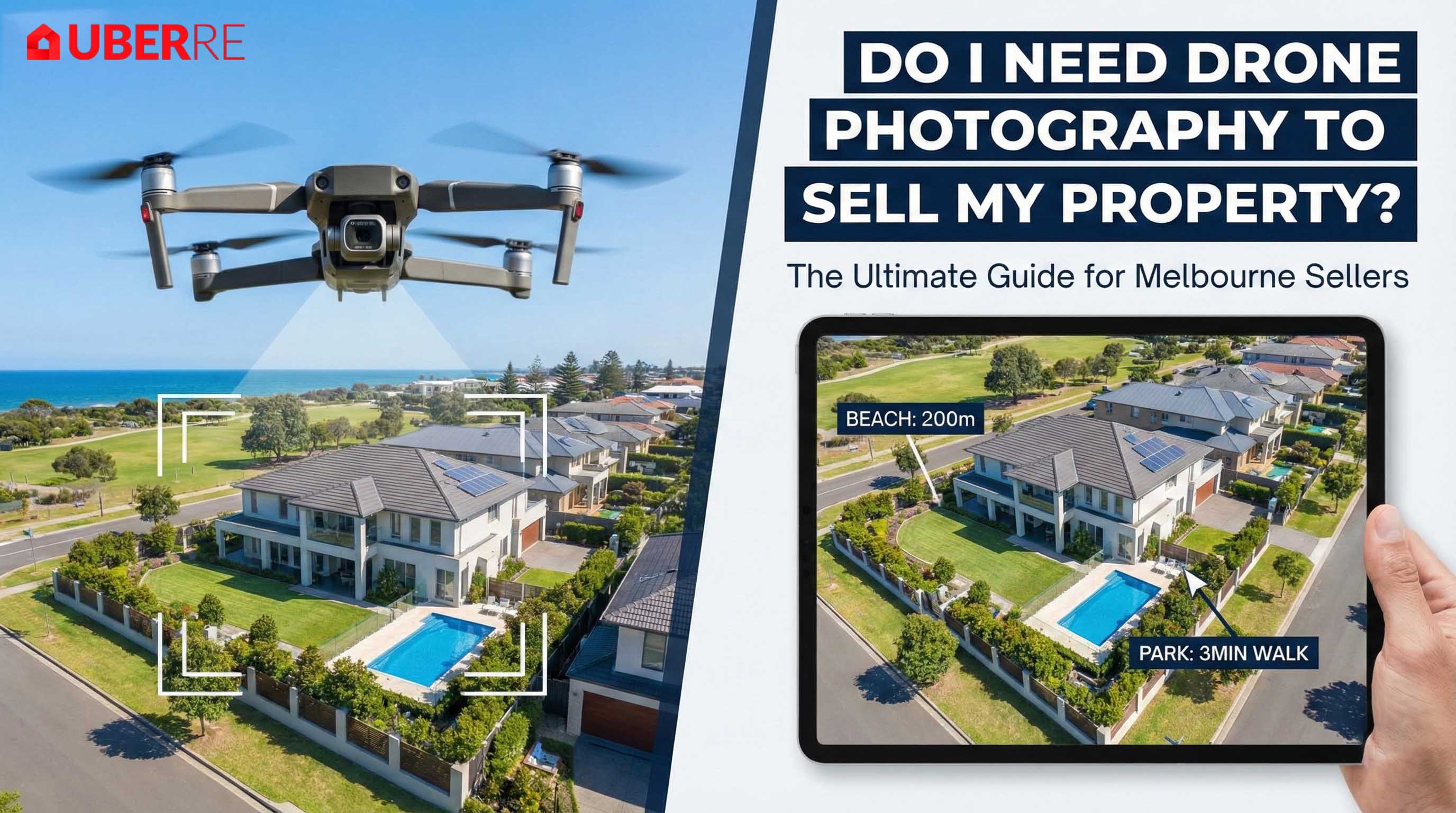
The "5-Second Rule" is the industry standard for real estate video. You have exactly five seconds to deliver a high-value hook before a user scrolls. Match the pace of your script to the technical transitions in your aerial drone photography. When the camera captures a sweeping coastal vista, the copy should be silent or use minimal, high-impact nouns. Less is more when the visual content is performing the heavy lifting. Your words should provide the technical context that the camera cannot, such as land dimensions or school catchment proximity.
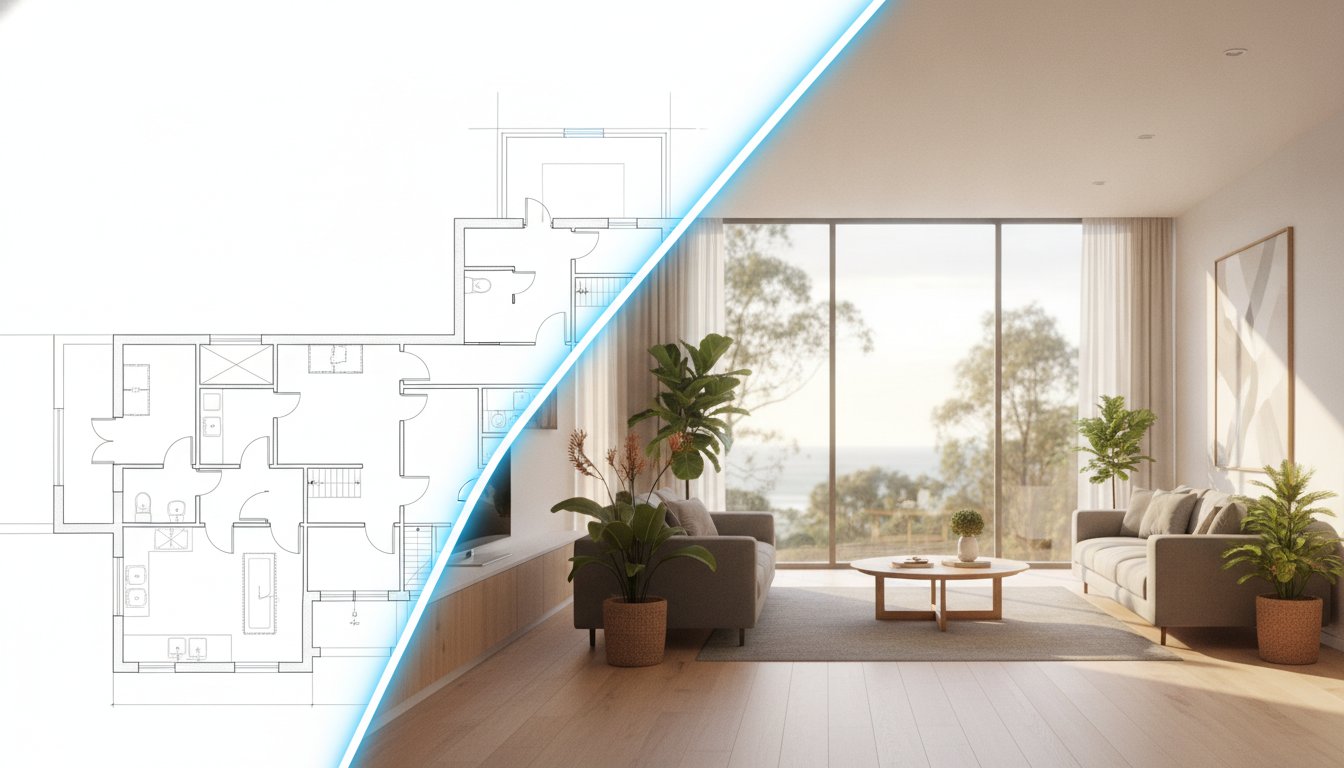
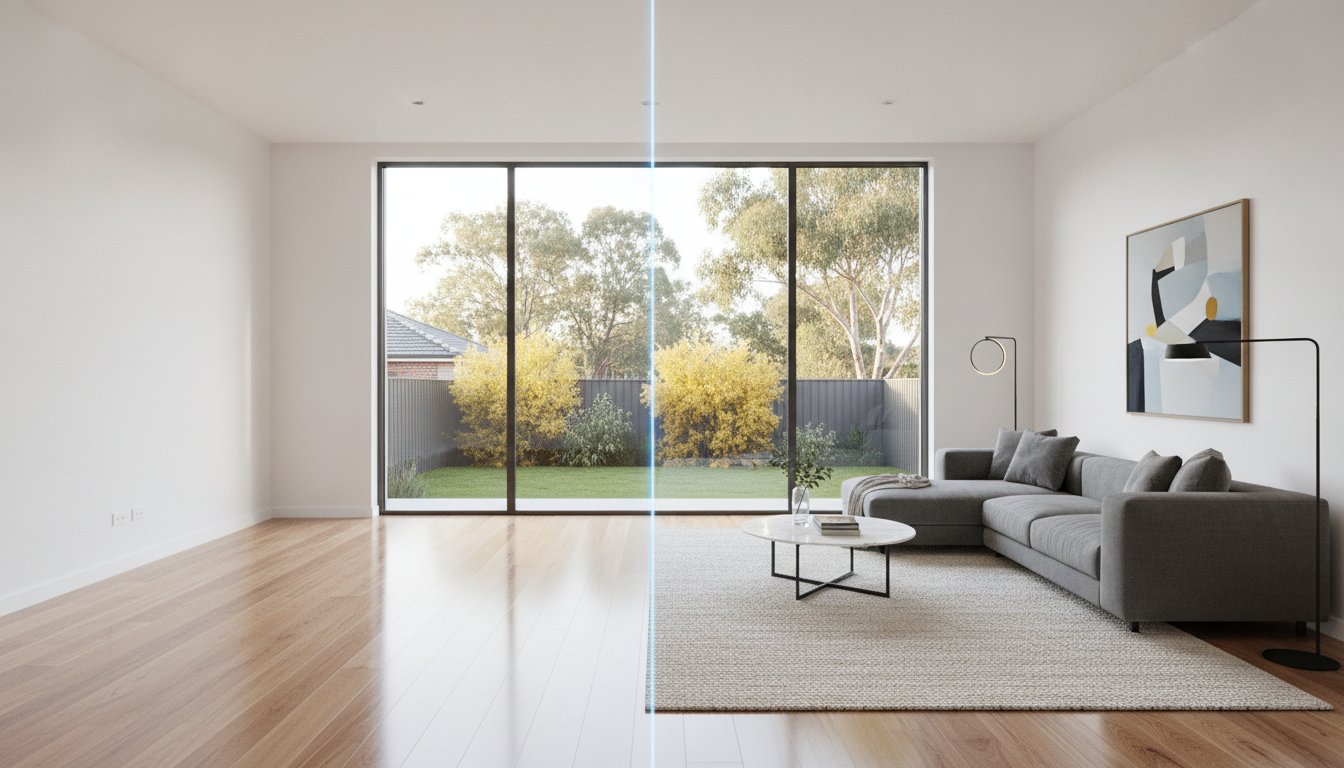
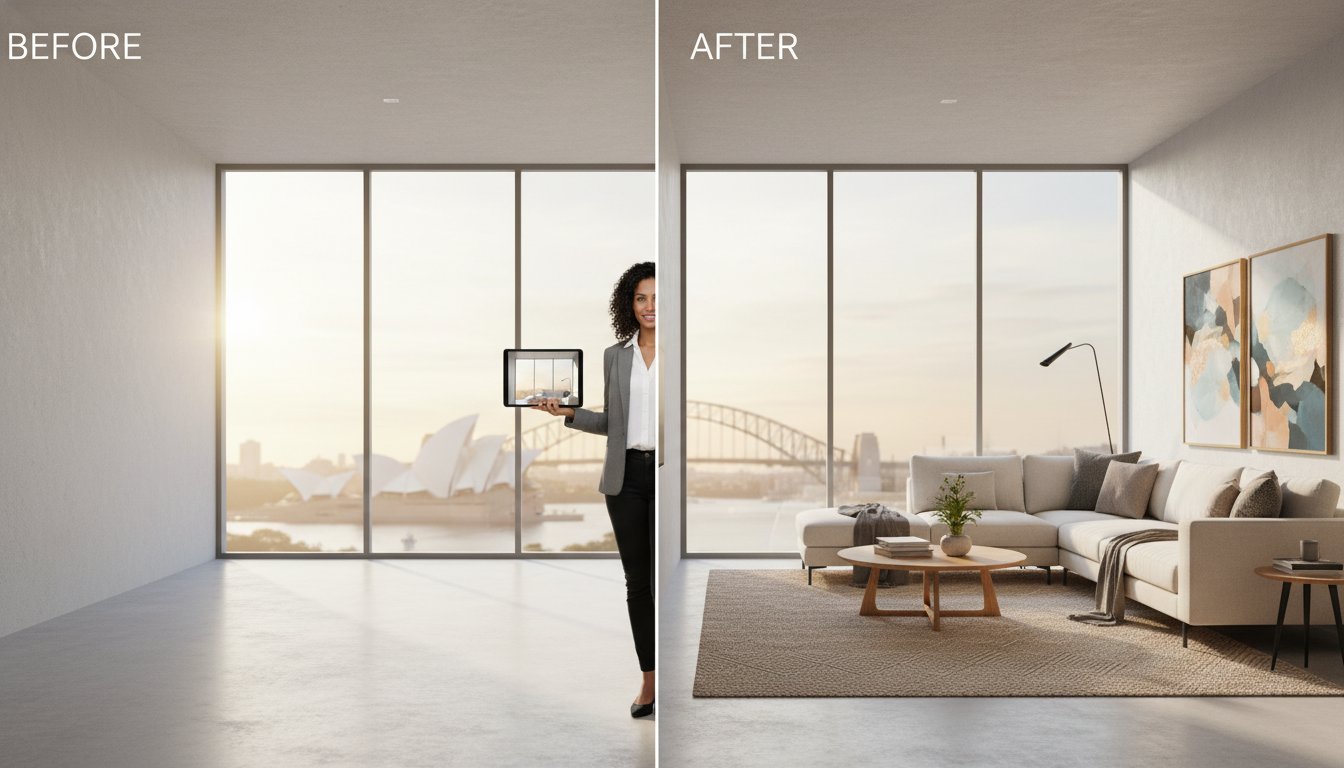
Micro-copy is the narrative glue for interactive assets. Use concise text to explain the "future potential" in virtually staged rooms, helping buyers visualise how a vacant space functions as a high-end home office or nursery. Annotating floorplans to highlight spatial efficiency and internal flow provides immediate clarity for skim-readers. A 2D floorplan becomes a powerful sales tool when paired with a descriptive "spatial narrative" that guides the viewer through the home’s logical progression. These real estate copywriting tips ensure that your technical data and visual media work in total synchronisation to drive enquiries.
Top-tier Australian agents in 2026 have moved beyond the "DIY" approach to listing descriptions. Managing a high-volume portfolio while maintaining a 24-hour listing cycle requires a shift from creative execution to system management. Outsourcing to a professional service is now a standard efficiency framework rather than an optional luxury. This strategy ensures that your marketing momentum remains high, even during peak periods when administrative friction often stalls campaign launches. By implementing advanced real estate copywriting tips through a specialised partner, you protect your most valuable asset: time.
The cost-benefit analysis of professional copywriting is clear. If a lead agent spends two hours drafting and refining a single property description, the opportunity cost often exceeds the professional fee by a significant margin. Those two hours are better spent on high-value activities like appraisals, vendor negotiations, and closing sales. Professional services provide a corporate, results-driven output that eliminates the "writer’s block" associated with listing similar properties. This technical approach ensures every listing in an agency’s portfolio meets a premium standard, regardless of which agent is handling the sale.
UberRE’s professional copywriting integrates directly with our total visual suite, including professional real estate photography and interactive floorplans. This integration creates a centralised infrastructure for your marketing collateral. When your copy, photography, and data-driven assets are produced in synchronisation, the result is a cohesive narrative that builds immediate buyer trust. You no longer need to manage multiple freelancers or internal staff to get a listing live. You simply book the service, and the technical output is delivered ready for portal upload.
Our service provides a standardised quality that removes the "hit or miss" nature of in-house drafting. By utilising a fresh, objective perspective, our writers identify high-value features that an agent might overlook after multiple site visits. This technical objectivity is essential for articulating a property’s best features with precision. You can organise your booking alongside photography and floorplans through a single interface, ensuring maximum operational efficiency and a consistent brand voice across all marketing channels.
To maximise your ROI, consider bundling professional copywriting with your visual packages. This approach provides "Total Marketing Assurance" for your vendors, demonstrating a commitment to high-quality, tech-integrated representation. Setting this new standard differentiates your brand in a fragmented market and ensures your listings are engineered for conversion from Day 1. It's time to move away from mediocre text and embrace a high-performance narrative strategy. Explore UberRE’s Professional Copywriting Services today to streamline your 2026 listing workflow.
Success in the 2026 Australian market requires a technical synchronisation between your visual assets and your descriptive text. By implementing these real estate copywriting tips, you transform passive listings into high-performance sales tools that drive immediate buyer action. Focus on narrative alignment and lifestyle-oriented headlines to ensure your brand remains the authority in your local area. This approach moves beyond simple description to provide a results-driven framework for modern lead generation.
Transitioning to a standardised marketing workflow eliminates the administrative friction of drafting while maintaining total regulatory compliance. UberRE offers authoritative Australian industry expertise with a guaranteed 24-hour turnaround on finished content. Our service is seamlessly integrated with professional photography and floorplans to create a cohesive, premium portfolio for every property you represent. Elevate your listings with UberRE Professional Copywriting and set a new standard for your vendors. We look forward to supporting your next campaign.
Target a length of 300 to 400 words for standard portal listings to maximise engagement without losing the reader's interest. While platforms allow more, mobile users prioritise concise, digestible information. Break the text into short paragraphs and use bullet points for technical specifications to ensure the content remains readable on smaller screens.
High-intent keywords for the Australian market include "North-facing", "alfresco", "butler’s pantry", and "school catchment". These terms directly address local buyer priorities like natural light and entertaining capacity. Integrating these real estate copywriting tips helps your listing appear in filtered searches on major property portals like Domain and Realestate.com.au.
Construct your headline using a Benefit + Feature + Location formula to promise a specific lifestyle outcome. Avoid generic phrases like "House for Sale" or "Great Opportunity". Instead, use action-oriented structures such as "Entertain in Style: Architect-Designed Villa with Private Pool in Coogee" to establish immediate value and context.
AI tools can generate basic drafts, but they often lack the technical precision and local nuance required for the Australian market. They frequently rely on tired cliches that can diminish your brand authority. Professional oversight is essential to ensure the narrative aligns with your visual assets and meets 2026 regulatory standards.
Lead with lifestyle benefits to build an emotional connection, then use property features to provide technical justification. A benefit explains how the buyer will live in the space, while a feature confirms the physical infrastructure. This dual approach satisfies both the aspirational and logical requirements of a high-intent purchaser.
Focus on the "potential" and "strategic opportunity" when describing a property that requires renovation. Highlight the land size, zoning advantages, or the strength of the existing floorplan. Avoid deceptive language; instead, position the home as a value-add project for developers or renovators looking for a specific location.
Professional copy improves SEO by increasing dwell time and click-through rates, which are key ranking signals for property portals. High-quality text keeps users on the page longer and encourages engagement. This increased interaction tells the portal’s algorithm that the listing is relevant, potentially leading to better organic visibility.
The most frequent error is the use of generic cliches that fail to differentiate the property from its competitors. Phrases like "rare gem" or "stunning views" provide no technical value or specific information. Another critical mistake is a disconnect between the text and the listing photos, which creates immediate confusion for the viewer.
Book with UberRE
Photography, video, drones, floor plans and 3D tours from one supplier, with photos ready within 24 hours.
See the service and prices
-2.png)